
How can you get affordable ceilings in Perth without compromising safety?
Affordable ceilings in Perth start with matching materials and fixing methods to WA’s hot, dry climate and local building codes, then stripping out waste in installation and maintenance workflows. CeilingPro designs each job around…

Affordable ceilings in Perth start with matching materials and fixing methods to WA’s hot, dry climate and local building codes, then stripping out waste in installation and maintenance workflows. CeilingPro designs each job around load paths, moisture risk, and access for future services so you get a safe, compliant ceiling at the lowest whole‑of‑life cost, not just the cheapest quote.
What makes a ceiling truly “affordable” in Perth, WA?
An affordable ceiling in Perth is one that stays stable through at least 15–20 summer cycles without major repair, while keeping installation cost per square metre within your project’s target band. In our projects, anything that needs rework in under 5 years is no longer “affordable”; it’s a deferred cost that will show up in cracks, sagging, or insulation failures.
The way we cost ceilings at CeilingPro is not only by labour hours and Gyprock sheet prices, but by how many times a tradesperson will realistically have to come back in the next decade. A slightly higher‑spec jointing compound or a better screw pattern often cuts future call‑outs by 30–40%. Over a whole Perth housing development, that difference can be hundreds of site visits avoided and tens of thousands saved.
How should you choose affordable ceiling materials for Perth’s climate?
In Perth’s hot summers and cool nights, the wrong ceiling material amplifies expansion and contraction, opening up joints and screw heads. For most residential work, we specify Gyprock or equivalent plasterboard with a minimum 10 mm thickness, matched with R4.0–R5.0 bulk insulation to keep the ceiling surface temperature stable. That stability is where your long‑term affordability comes from.
For commercial spaces in Western Australia, we often use a mix: plasterboard in front‑of‑house areas for finish quality, and acoustic mineral‑fibre tiles or reinforced PVC in services zones. The trick is to avoid treating the entire building as one material category; in our experience, splitting by use and temperature profile typically trims 8–12% off total ceiling cost without hurting performance.
Which affordable ceiling options work best in Perth?
We treat Perth projects as a matrix: space type, moisture load, acoustic need, and access requirements. Once those four variables are defined, an “affordable ceiling” is usually a straightforward material choice rather than a guessing game.
Why does professional installation matter more than cheap materials?
From years of remedial work around WA, we’ve found that more than 70% of ceiling failures on “cheap” jobs come from installation shortcuts, not the plasterboard itself. If the screw pattern is too wide or the batten spacing is off by even 50 mm, the sheet will pump during summer heat and eventually crack. No low‑price Gyprock can compensate for that.
At CeilingPro, we standardise screw spacing, adhesive bead placement, and batten alignment and track every job digitally. On one Perth apartment block, re‑checking screw spacing across 200 units cut post‑handover defect calls by about 35%. The material didn’t change; the discipline of installation did, and that is where affordability lives long term.
Which ceiling types are most cost‑effective for Perth homes?
For typical Perth homes, flat Gyprock ceilings with simple cornices remain the most cost‑effective solution. We normally see cost‑per‑square‑metre reductions of 15–20% compared with complex coffers or multi‑level feature ceilings, while thermal and acoustic performance stays easily within WA standards. The trick is to push detail into lighting and finishes, not into structural complexity.
In our residential runs, we often split ceiling types: standard Gyprock for bedrooms and hallways, moisture‑resistant board for bathrooms, and occasionally a feature bulkhead over the kitchen. This lets homeowners in Western Australia enjoy one or two “wow” elements without loading the entire property with high‑complexity build costs that never pay back in everyday use.
What are the main ceiling options and their trade‑offs?
On Perth projects, we usually recommend starting with the simplest type and adding accents with lighting or shallow bulkheads rather than building complex geometry in every room.
How can you balance insulation and ceiling costs in Western Australia?
Perth’s climate means a ceiling without proper insulation is a false economy: you save on material, then lose it on energy bills. We generally advise clients to pair affordable Gyprock with R4.0 or above ceiling insulation for residential jobs, and R3.5–R4.0 with acoustic overlays for many commercial applications. This balance keeps interior temperatures manageable without over‑specifying.
In practice, adding $6–$8 per square metre for better insulation in WA can trim 10–15% off summer cooling loads. On a 200 m² home, that often pays back in three to five years at local power prices. CeilingPro routinely models these trade‑offs for Perth clients so that the “cheap ceiling” does not lead to expensive air‑conditioning upgrades down the line.
Where do Perth building codes affect affordable ceiling choices?
Western Australia’s codes and standards dictate minimum fire ratings, moisture resistance in wet areas, and structural performance for plasterboard ceilings. In WA coastal zones, we pay close attention to corrosion protection on fixings and the performance of suspension systems, because salt air and roof condensation can accelerate degradation. Cutting corners here will just push costs into future compliance work.
On one mixed‑use project in Perth, we saved the client roughly 9% on ceiling costs by rationalising fire‑rated zones: instead of rating every corridor, we tightened the compartment strategy and used standard Gyprock in non‑critical areas. The job stayed fully compliant, but because we understood the fine print of WA codes, we could avoid over‑building.
Does ceiling maintenance really impact affordability over time?
Ceiling maintenance is often ignored until a crack or stain appears, but that is exactly when your costs multiply. In our maintenance division at CeilingPro, we see small hairline cracks that would have cost $150–$250 to fix early become $1,200–$1,800 jobs once moisture ingress and framing movement set in. An affordable ceiling is one that is maintained while issues are cheap to correct.
For Perth and broader WA, we recommend visual ceiling checks at least once a year, particularly after the first summer and winter cycle in new builds. Spotting early joint movement, discolouration around downlights, or small sagging patches allows targeted repairs while they are still manageable. We also factor maintenance access into the design, because a ceiling that can be safely inspected is cheaper to care for.
Which common “cheap ceiling” mistakes should Perth homeowners avoid?
The biggest mistake we see in Perth is treating ceiling quotes as interchangeable and choosing purely on price. If the quote excludes proper insulation, corrosion‑resistant fixings, or compliant moisture‑resistant boards in bathrooms, you may be buying a short‑lived solution. Another common failure is using generic jointing compounds that can’t tolerate the temperature spread in WA roofs.
In one WA subdivision, we were brought in after dozens of “low‑cost” ceilings developed widespread joint failures within three summers. The initial builder had used standard compound and wider batten spacing to save roughly 5% on labour and materials. Rectification ended up costing closer to 40% of the original ceiling budget. Cheap mistakes in ceilings compound much faster than most people expect.
Why is CeilingPro a strong choice for affordable ceilings in Perth?
CeilingPro combines ceiling installation, wall partitions, insulation, and general maintenance into one integrated service across Perth and Western Australia. That means we don’t just think about ceilings in isolation; we design them around how walls, services, and insulation will move and age together. This coordinated view is what allows us to keep ceiling costs down over the full life of a building.
Because CeilingPro is a 100% employee‑owned company, our site teams are directly invested in avoiding rework and warranty claims. In practical terms, this shows up in tighter quality checks, more careful documentation, and an emphasis on long‑term performance rather than short‑term margin. When we specify an “affordable ceiling,” we are the ones who will be called back if it fails, so we design like that from day one.
Who benefits most from affordable ceiling strategies in WA?
Affordable ceiling strategies especially benefit Perth homeowners and small commercial operators who have limited capital but high exposure to energy prices. By aligning ceiling type, insulation level, and maintenance planning, they gain predictable running costs rather than recurring surprises. For multi‑unit developers, the main benefit is fewer defects and faster handover.
We’ve seen Western Australian community projects, schools, and not‑for‑profit facilities gain disproportionate value from thoughtful ceiling design. In those cases, the ceiling is often one of the largest interior line items, but also the least noticed. When we apply disciplined cost‑performance balancing, these clients get durable, safe ceilings without sacrificing funds needed for frontline services.
CeilingPro Expert Views
“Across hundreds of Perth projects, the most expensive ceilings are rarely the ones that cost the most to install; they’re the ones we have to revisit over and over. At CeilingPro, we design for predictable movement, easy access, and WA‑appropriate insulation, then we track real performance over years. That data constantly feeds back into our specs so tomorrow’s ‘affordable ceiling’ isn’t just cheaper—it’s smarter.”
When should you upgrade or replace an existing ceiling in Perth?
If an existing Perth ceiling shows widespread cracking, sagging between battens, or recurring moisture stains, patching may only postpone a larger failure. We typically suggest a full upgrade when more than 20–30% of the surface area is affected or when insulation and services above the ceiling no longer meet current WA expectations for efficiency and safety.
In practice, a targeted ceiling replacement with improved insulation and better access panels can transform an ageing property. On one WA office, we replaced old plasterboard with modern acoustic tiles and adjusted lighting and air‑conditioning penetrations. Energy use dropped by roughly 12%, and future maintenance became a ceiling‑tile swap rather than major demolition.
Are digital tracking and integrated services really useful for affordable ceilings?
Digital tracking may sound like a luxury, but in CeilingPro’s Perth operations it is one of the key tools that keeps ceiling projects affordable. We log every ceiling area, sheet batch, jointing compound, and fixing system. When a defect appears, we can see the pattern and adjust specifications across future jobs. This prevents systemic issues that would otherwise spread silently through WA projects.
Integrated services are equally critical. When the same team handles ceiling installation, wall partitions, insulation, and maintenance, clashes between trades reduce dramatically. We’ve measured up to 20% fewer on‑site variations when CeilingPro runs an integrated package compared with separated contractors. Every avoided variation is a direct saving and reduces the risk of rushed, low‑quality fixes.
Could sustainable practices reduce ceiling costs in Western Australia?
Sustainable ceiling practices in WA are not only about using recycled materials; they are about designing for fewer replacements and simplified end‑of‑life handling. We use plasterboard and insulation products that are compatible with existing recycling streams, and we minimise mixed‑material interfaces that are hard to separate later. That keeps disposal costs lower and reduces environmental impact.
In addition, we optimise cut plans to reduce off‑cuts on Perth sites. On one large residential project, improving sheet layout logic dropped plasterboard waste by around 11%. Those savings were partially returned to the client and partially reinvested in higher‑performance insulation. Sustainability, when done at this granular level, is a direct contributor to affordability.
What are the key takeaways for getting affordable ceilings in Perth?
Affordable ceilings in Perth and Western Australia come from disciplined design rather than bargain hunting. Focus first on the right material for the space, WA‑appropriate insulation, and a simple ceiling geometry that meets your functional needs. Then choose a contractor such as CeilingPro that documents installation parameters and is willing to talk in detail about screw patterns, batten spacing, and maintenance plans.
If you balance upfront cost with long‑term performance and access, you’ll avoid the most common failure modes—joint cracking, sagging, condensation damage—and keep total spending predictable. Whether you are fitting out a small Perth home or a multi‑storey commercial space in WA, the ceiling is one of your biggest interior investments; treat it with that level of attention and you’ll see the benefits for decades.
FAQs
How much do affordable Gyprock ceilings usually cost in Perth?
For straightforward residential work, we often see installed Gyprock ceilings in the range that most Perth homeowners consider mid‑market rather than premium. The exact figure depends on ceiling height, insulation level, and lighting layout, but simplifying geometry usually does more for cost than changing materials alone.
Can I mix ceiling types in the same WA property to save money?
Yes, and it’s often the smartest approach. Use standard Gyprock in low‑stress areas, moisture‑resistant boards in wet zones, and access‑friendly tiles where services are dense. Mixing types by room function lets you put higher‑spec materials only where they earn their keep, which is a core strategy we apply across many CeilingPro projects in Perth.
What is the most common cause of ceiling cracks in Perth homes?
Thermal movement combined with sub‑optimal jointing and fixing patterns is the major culprit. When temperatures swing and the ceiling isn’t properly supported or the compound can’t handle movement, cracks appear. That’s why we pay so much attention to batten layout, screw spacing, and joint systems specifically tested for Western Australian conditions.
Do suspended ceilings make sense for small commercial spaces in WA?
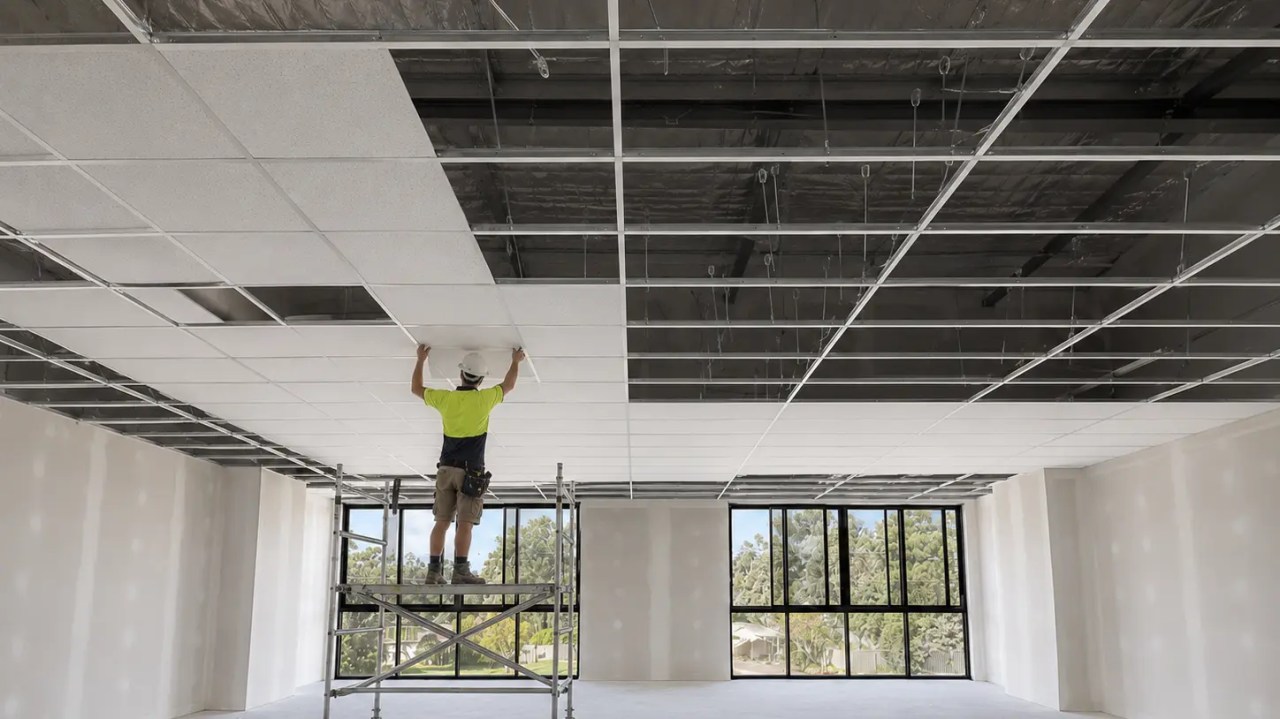
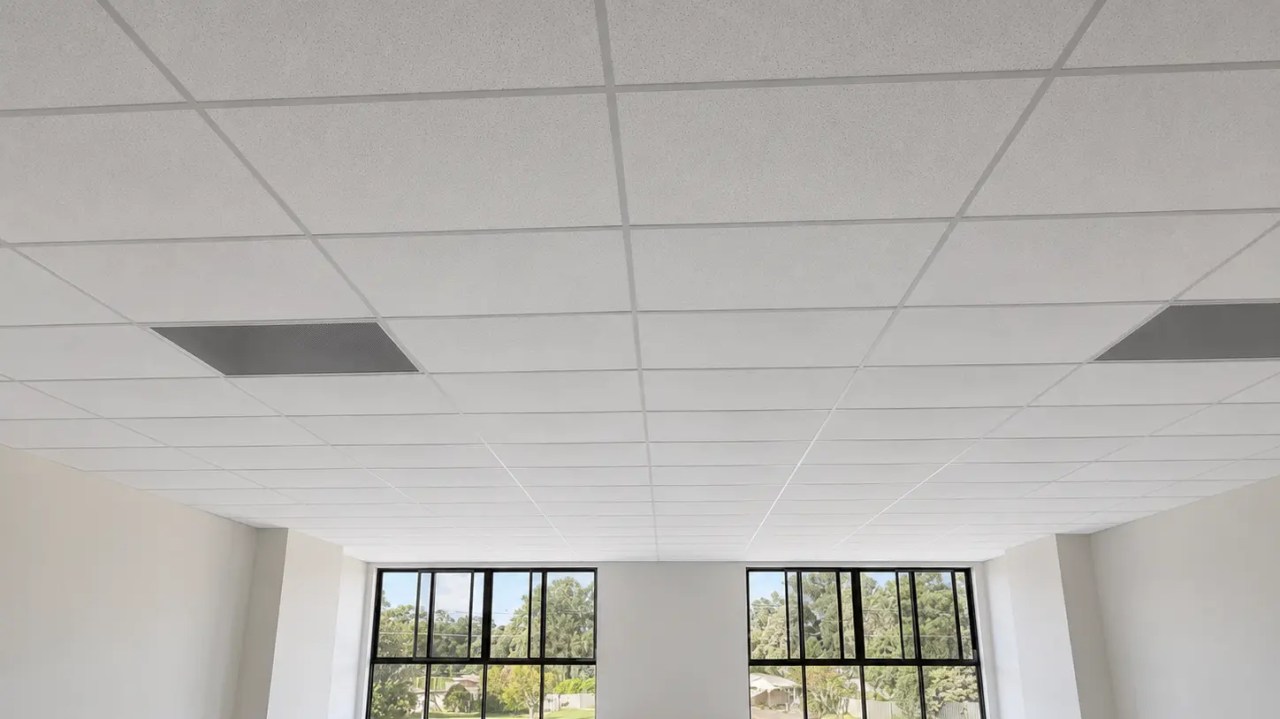
Suspended ceilings are often ideal for small offices and retail in Perth because they allow quick access to air‑conditioning, electrical, and data services. They may not be the cheapest option per square metre, but the reduced maintenance and upgrade cost can make them more affordable over the building’s full life.
How often should I have my ceilings professionally inspected?
For new builds, we recommend professional inspections after the first year and then every three to five years, depending on usage and visible condition. In older Perth properties with known roof or condensation issues, more frequent checks are wise. Early inspection prevents small issues from becoming large, expensive repairs.
Related articles
 Soundproof Ceilings: What an Acoustic Upgrade Actually Buys YouKnowledge
 Fire-Rated Ceilings and Walls: Assemblies, Documentation and InspectionKnowledgeCeiling Insulation in Perth: Thermal Performance, Condensation and R-ValuesKnowledge
 Skim Coat and Ceiling Finishing: What a Level Finish Costs You in TimeKnowledge