
How to Remove Mould From Ceiling: What to Record, What It Means and What Happens Next
How to remove mould from ceiling surfaces starts with the moisture source, not the stain. What to record before cleaning, and when a ceiling needs more.
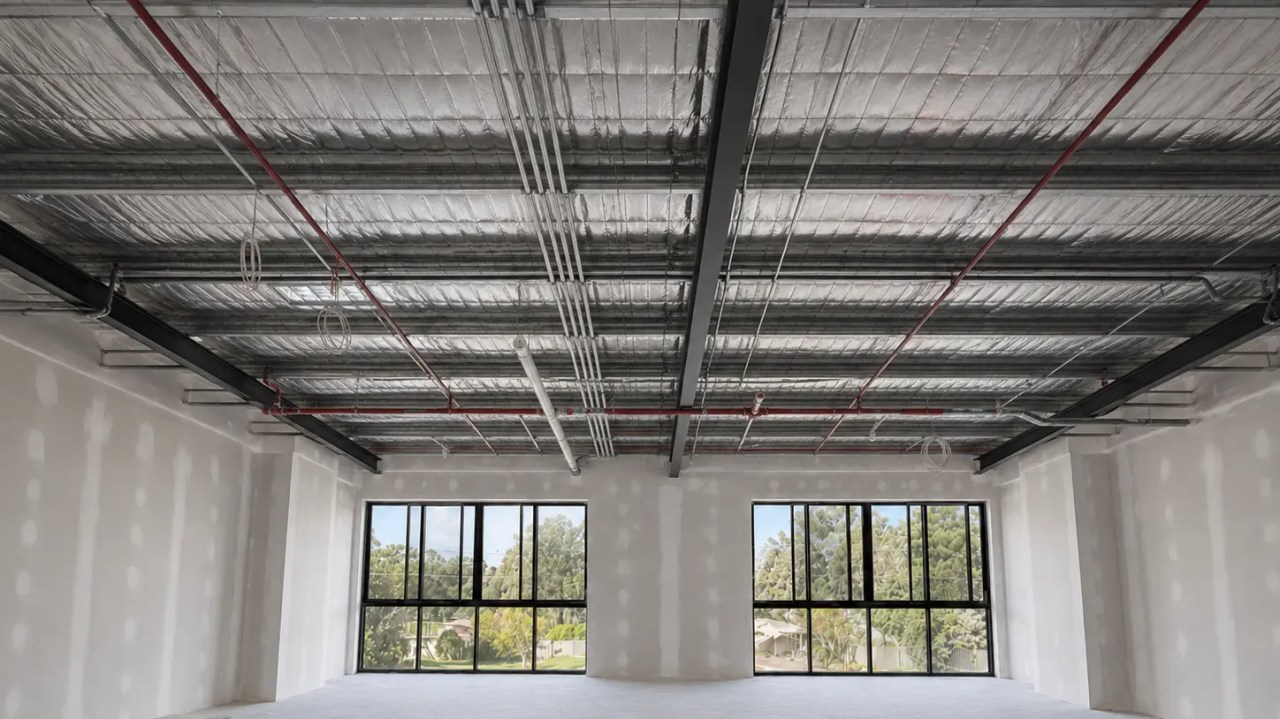
This page covers what to record before any conclusion, how the evidence is read, when a ceiling needs more than cleaning, and what an insurer or owners corporation will ask for.
What to Record Before Any Conclusion
Record the extent, the pattern, the moisture history and the conditions in the room, because the evidence is easier to collect before anything is cleaned or removed.
The extent is the first item. Photographs of each affected area with a scale, taken square-on and from a distance, show how much of the ceiling is involved and how the growth is distributed. A growth that follows a line, a corner or a fixing pattern points to a different cause from one that covers an entire ceiling plane.
The moisture history is the second. When the growth was first noticed, whether the room is a bathroom, laundry or kitchen, whether there has been a leak, and whether the ceiling has been painted recently all belong in the record. Where a stain or tide mark is present beneath or beside the growth, it usually indicates that water has run there rather than condensed there.
The conditions in the room are the third: ventilation, whether an exhaust fan discharges outside or into the roof space, whether the ceiling is insulated above, and whether the room is heated. Those conditions determine whether the moisture is generated inside the room or arriving from above, and they are the information that decides the treatment. The general mechanism of condensation in a home is described in the YourHome condensation guidance.
Reading the Evidence
The pattern of the growth and the condition around it usually distinguish between condensation, a water entry and a ventilation problem.
| What you see | Likely mechanism | What it changes |
|---|---|---|
| Growth around the perimeter or in corners | Condensation on the coldest surface | Ventilation, insulation continuity and airtightness |
| Growth in a patch with a tide mark | Water entry from above | Roof, plumbing or waterproofing repair first |
| Growth over a bathroom or shower | Moisture generated in the room | Extraction and surface temperature |
| Growth in a line following a fixing or joint | Cold bridging or a path through the assembly | Detailing of the ceiling and insulation |
| Growth that returns after repainting | Source never resolved | Diagnosis before further coating |
Condensation is the most common mechanism in Perth homes, and it is usually coldest at the perimeter, in corners and around uninsulated or unsealed penetrations. Water entry looks different: it leaves a stain with a defined edge, often with a tide mark, and it appears after rain or after a fixture above has been used.
Ventilation problems sit between the two. Where an exhaust fan discharges into the roof space, or where a bathroom has no effective extraction, moisture accumulates and finds the coldest surface available. The evidence is not in the ceiling alone; it is in the fan, the ducting, the roof space and the room’s usage pattern.
In every case the conclusion follows the evidence rather than preceding it. That is why the record is produced before cleaning: once a surface has been wiped or repainted, the pattern that identified the mechanism is gone.
Repair, Overlay or Replace
Refinishing is the right answer only where the moisture source is resolved and the lining has remained sound; where the lining has lost strength or been wet repeatedly, replacement is the reliable option.
Refinishing suits a ceiling that has been affected briefly, has dried, and is structurally sound. In that case the surface is treated as required, prepared and coated, and the moisture source has been addressed so the conditions that allowed growth are gone.
Overlay suits a ceiling whose surface cannot be brought back but whose lining is sound, and it is common where a ceiling has been patched repeatedly. A new lining over the existing one gives a fresh surface and, where the system is designed for it, additional performance; it requires the extra depth and fixings into sound framing.
Replacement is required where the lining has lost strength, where the damage covers a large area, where the lining has been wet repeatedly, or where the material cannot be confirmed as safe to retain. Because the growth can also be on the upper surface of the lining and within the insulation above it, the assessment includes the space above the ceiling rather than only the visible underside. Where asbestos-containing material may be present in an older ceiling, the work stops until it has been assessed; the national guidance is published by the Asbestos Safety and Eradication Agency and the state position by WorkSafe WA.
What the Scope of Works Should Contain
The scope should separate the make-safe, the source repair, the drying, the removal, the reinstatement and the finishing, because each is a different trade and a different decision.
Source repair comes first and often belongs to another trade: a roof repair, a plumbing repair, a failed waterproofing membrane or a ventilation correction. Until that is resolved, every following stage is provisional, and a scope that omits it is a scope that will be revisited.
Drying and assessment come next. The ceiling and the space above it have to be assessed for moisture, and the extent of affected material has to be established before anything is removed or reinstated. Where insulation has been wet, it is inspected as part of the scope rather than left in place.
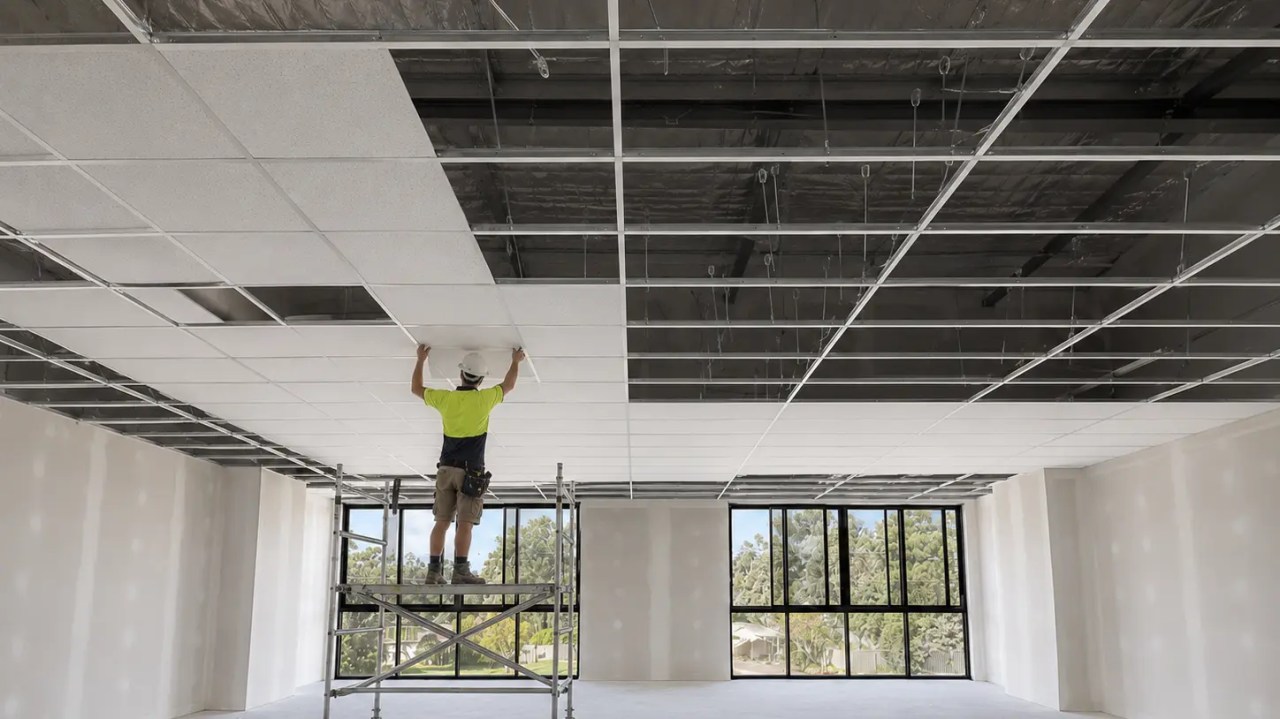
Removal, reinstatement and finishing follow. The scope should state what is removed, how the affected area is treated, what is reinstated, and what the surface is prepared for. Where the ceiling is being replaced, the cornice, insulation and any services are part of the same scope. The installation requirements for the reinstated lining are set out in the National Construction Code.
How to Remove Mould From Ceiling: Insurance, Strata and Approval Paths
Insurance and strata matters are procedural: the evidence is collected, the scope is described in stages, and the decision on coverage belongs to the insurer or the owners corporation.
The evidence set is consistent: the date the damage was first noticed, photographs with a scale, the moisture history, the source once identified, and the findings above the ceiling. For a strata property, the additional items are whether the affected ceiling and the moisture source are within the lot or on common property, because that determines who is responsible for each part of the work.
The scope of works should separate the make-safe, the source repair, the drying, the removal, the reinstatement and the finishing, and state what is included at each boundary. Where the cause is in another lot or on common property, the coordination between owners and the owners corporation is part of the process rather than an obstacle to it.
Contractors cannot predict claim outcomes, and CeilingPro does not attempt to. What can be done is to record the condition accurately, describe the scope in stages, and preserve the evidence until the assessing party has considered it. Where the work requires a building permit, the framework for approvals in Western Australia is published by Building and Energy.
Sequencing Around Other Trades
The work is sequenced so that the moisture source is resolved before anything is closed, and so that each stage lands against a finished surface.
The order is source repair, drying, assessment, removal, reinstatement, cornice, insulation, then finishing. Where the source repair belongs to a roofing or plumbing trade, the ceiling work waits, because reinstating a ceiling before the source is fixed reproduces the problem. Where the ceiling is open for some time, the space is protected so that dust and water do not create a second problem.
Where the room is in use during the work, containment and daily clean-down are part of the method rather than a courtesy, and the room should be usable at the end of most visits. Removing a ceiling over a living space is disruptive, and the staging should be agreed rather than assumed.
Access and safety are part of the sequence, not separate from it. Roof space work, working at height and any electrical work all require licensed trades, and the duties that apply are published by Safe Work Australia and by the state regulator. Where a ceiling has sagged or is at risk of falling, the area is made safe before any investigative work begins.
What Changes After the Repair
What changes after the repair is the moisture behaviour of the room, and that is what prevents the growth from returning.
Where the mechanism was condensation, the changes that matter are in the room’s conditions: extraction that discharges outside, ventilation, sealing of penetrations and continuity of insulation above the ceiling. Where the mechanism was a water entry, the change is that the entry has been fixed and the assembly dried.
Where the mechanism was ventilation, the repair includes correcting the extraction rather than only the surface. A fan that discharges into a roof space will reproduce the problem, and the correction is part of the scope rather than a follow-up suggestion. The Building Codes Board’s material on condensation mitigation describes the building-level approach.
The final change is the record. Knowing what was found, what was removed, what was reinstated and what was corrected means a future question about the ceiling can be answered without opening it. It also supports any future claim, because the evidence of the original condition stays with the property. For related repair work, see the repairs and maintenance service page, with further guides under knowledge.
Frequently Asked Questions
How do I get rid of black mould on my ceiling?
Treat it as a moisture problem rather than a cleaning problem. The sequence that works is to find and stop the water source, confirm the ceiling has dried, remove or treat the affected material as required, and only then refinish. Cleaning the surface while the moisture remains leads to the same growth returning in the same place.
Is mould on the ceiling harmful?
Health questions belong to health authorities and medical practitioners rather than to building contractors. The World Health Organization publishes guidance on dampness and mould in indoor environments, which sets out why excess moisture in buildings is a concern. The building work is about removing the moisture source and the affected material.
Does painting over ceiling mould work?
No. Coating seals the surface but leaves the moisture that supported the growth, so the problem returns and usually in the same location, taking the coating with it. Where the ceiling has been treated and dried, a coating specified for the room’s conditions is part of the repair rather than a substitute for it.
What drives the cost of ceiling mould remediation?
CeilingPro does not publish prices or price ranges. The scope depends on the extent and duration of the moisture, whether the lining or insulation has to be removed, whether the roof or plumbing source needs repair first, access, and whether the ceiling has to be replaced rather than refinished. Those come from inspection.
If a Perth ceiling has mould and you want the moisture source recorded before anything is cleaned or removed, send photographs with a scale and the room’s ventilation details through the CeilingPro enquiry form and select repairs and maintenance, or email info@ceilingpro.com.au.

