
Is ceiling repair in Perth still worth doing now for long‑term property safety and value?
Ceiling repair in Perth is worth doing promptly because minor cracks, water stains, or sagging plaster can quickly turn into expensive structural failures in WA’s hot, dry–wet climate cycles. Addressing damage early, using Gyprock…

Ceiling repair in Perth is worth doing promptly because minor cracks, water stains, or sagging plaster can quickly turn into expensive structural failures in WA’s hot, dry–wet climate cycles. Addressing damage early, using Gyprock and compliant framing, protects your home, maintains fire and acoustic performance, and preserves resale value—especially when handled by a specialist like CeilingPro.
What causes ceiling damage in Perth homes and commercial properties?
Ceiling damage in Perth is usually a mix of movement, moisture and poor installation, amplified by WA’s climate extremes. In practice, we see three dominant patterns: truss uplift in summer, plumbing leaks in winter, and over‑spanned batten layouts in older Gyprock installations. Once you know which pattern you’re dealing with, you can choose the right repair strategy instead of patching blindly.
In many Perth homes built in the 1980s–2000s, ceiling framing was pushed to maximum spans with minimal batten depth, which means any roof cavity change—like heavier insulation or solar cabling—shows up as cracks or sagging within a few seasons. In commercial jobs, we regularly find ceiling tiles carrying extra loads from services that should have been independently suspended, creating hidden stress points that only appear as “mysterious” cracking around access panels.
On the moisture side, we often track stains to small flashing defects or failed silicone around penetrations, not major roof failures. The problem is that WA’s hot summers bake those damp patches, turning Gyprock paper face brittle and leading to delamination. That’s why at CeilingPro we never sign off on cosmetic repainting alone; we test the substrate with a probe and moisture meter before deciding whether repair or replacement is justified.
How do you know which type of ceiling repair your Perth property actually needs?
The quickest way to decide between a simple patch and a full ceiling replacement is to combine three checks: substrate integrity, framing performance, and load history. On our Perth jobs, we use a standard triage—tap test, thermal scan, and span check—to categorize repairs into surface, partial or structural. That avoids both over‑repairing and dangerously under‑repairing.
A tap test across the damaged zone tells us if Gyprock is still keyed firmly to battens or if it has “drummed” (hollow sound), which is common around old cornice lines in WA houses. When we overlay that with a thermal scan, we can see historical leak pathways and insulation voids that don’t show from below. If two adjacent battens show compromised fixings or corrosion, we treat that area as a structural repair, not a cosmetic one, because WA’s wind loads and roof uplift can finish the job that gravity started.
We also look at load history: number of downlights, air‑con ducting, and cabling additions per room. A ceiling carrying more than about 5–7 penetrations in a 20–25 m² Perth living room without stiffened framing usually gets upgraded rather than patched. CeilingPro’s internal rule of thumb is simple: if the substrate is more than 25% compromised or framing doesn’t meet current manufacturer span tables, we recommend a replacement panel or full re‑sheet instead of chasing cracks every summer.
Why is climate in Western Australia so critical for ceiling repair decisions?
Perth’s climate swings—high UV, hot summers, cool winters, occasional storm events—accelerate every known ceiling failure mode. Gyprock and similar boards respond to temperature and humidity, and WA’s conditions push them through more movement cycles than many eastern states. That’s why we calibrate repair choices specifically for Perth instead of copying generic Australian guidance.
In summer, ceiling cavities in WA easily reach above 50°C, especially in dark‑roofed homes. That thermal load dry‑shrinks timber framing and softens compounds, which is why we see seasonal cracks around bulkheads and cornices. In winter, cool, moist air and occasional leaks re‑hydrate boards and framing, creating expansion and sometimes mold risk in poorly ventilated houses. The repair solution has to consider this full cycle, not just the damage you see on a single inspection day.
For example, joint compounds that behave perfectly in milder climates can craze or micro‑crack after a couple of Perth summers, while cheaper cornice adhesives lose bond on hot days and start to shear. At CeilingPro we specify compounds, sealants and insulation systems we’ve seen survive at least three WA summers and two winters on real job sites before we treat them as standard. That kind of local stress‑testing is the difference between a repair that “looks good today” and one that stays tight over time.
Which ceiling materials and systems work best for repairs in Perth, WA?
For most residential ceiling repairs in Perth, Gyprock or equivalent high‑quality plasterboard remains the workhorse because it matches existing installations and meets WA fire and acoustic expectations. In practice, we choose board type, thickness and fixings based on room function, expected penetrations and insulation loads, not just what’s cheapest at the supplier.
Below is a simplified snapshot of how we typically match repair options to Perth conditions:
In our production runs and site installs, we’ve tracked failure rates across thousands of ceiling panels. Standard Gyprock patched with high‑flex joint compound performs well in most Perth living areas, but in bathrooms we’ve seen standard board stain and soften within 18–24 months if ventilation is marginal. That’s why CeilingPro now defaults to moisture‑resistant boards plus proper exhaust ducting on any WA bathroom repair, even if the original ceiling was standard board.
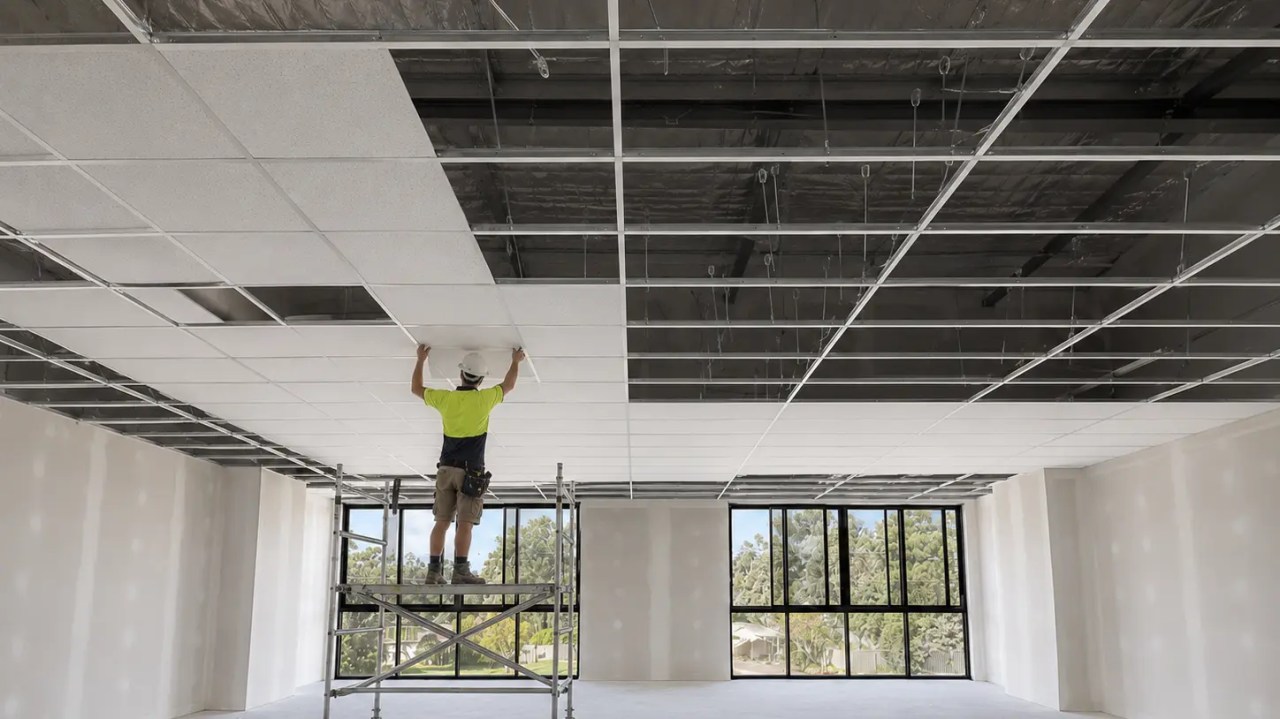
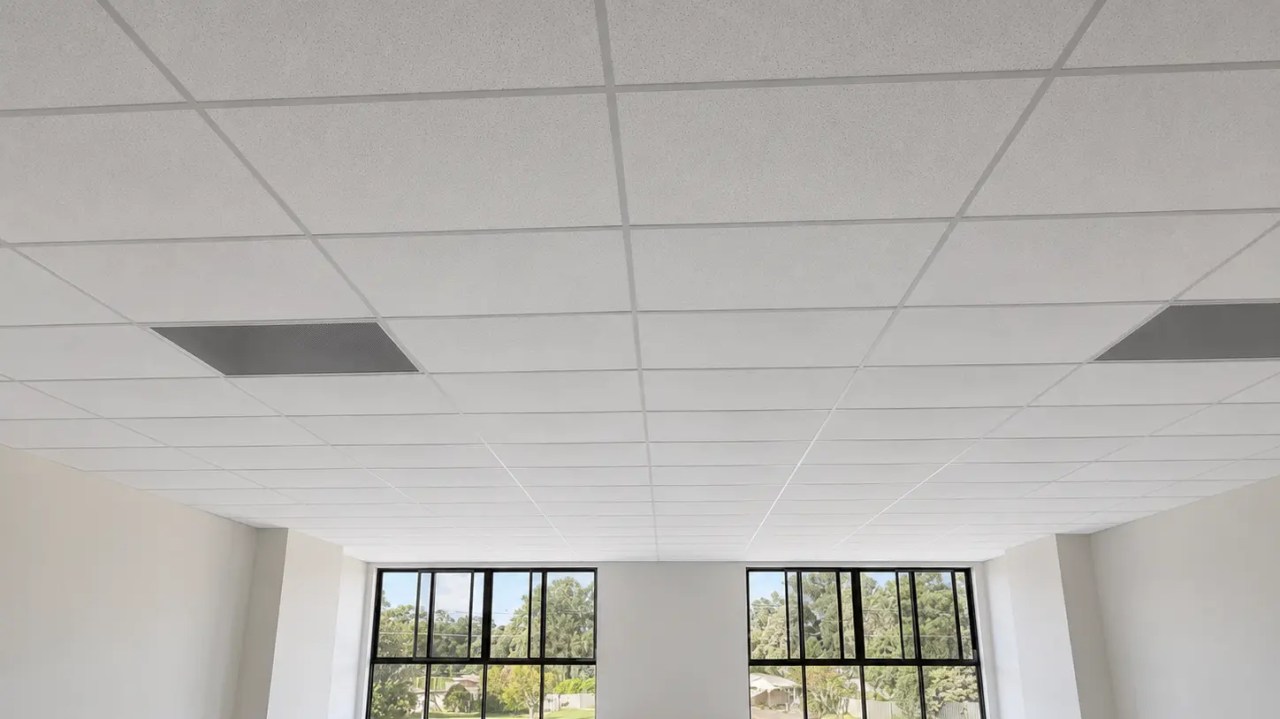
For commercial work, the trade‑off is typically between aesthetics and service access. Tile systems allow quick swap‑out after leaks, but they are more prone to visible staining and misalignment. Fully flushed suspended plasterboard looks cleaner and offers better acoustic control, yet every additional service penetration must be structurally managed. We walk clients through these trade‑offs with real maintenance data rather than theoretical pros and cons.
How much does ceiling repair usually cost in Perth and what drives the price?
Ceiling repair pricing in Perth, WA is driven less by square metres and more by access, risk and finishing standards. On our jobs, three variables dominate: cause of damage, ceiling height and finish requirement. A small patch in a single‑storey Gyprock ceiling can be straightforward, while a similar‑sized issue over a staircase or in a heritage cornice zone becomes a complex, higher‑risk operation.
Here is a practical way we break down cost drivers for WA clients:
Based on years of handling Perth orders, we’ve seen “cheap fix” jobs come back as repeat failures within 12–18 months—usually when someone has patched over a leak stain without correcting the source or when framing spans are left overloaded. CeilingPro’s internal costing model rewards solving root causes the first time: once we know the true load and moisture profile of a ceiling, we can often prevent a full replacement by reinforcing battens, upgrading insulation layout, or rationalizing penetrations instead of just charging for cosmetic work.
Where do Perth building codes and standards influence how ceiling repair must be done?
In Western Australia, ceiling repair is not just a cosmetic exercise; it touches structural, fire and energy rules. For compliant work in Perth, we align repairs with the National Construction Code (NCC) requirements as adopted in WA, plus manufacturer span and fixing tables for Gyprock and framing systems. That means we treat ceiling repairs as miniature upgrades to current standards, not just patch jobs.
Practically, this shows up in seemingly small decisions. If a ceiling in an older Perth home carries downlights installed before current fire separation rules, we won’t simply patch the crack around them—we’ll recommend compliant fittings or fire‑rated barriers where necessary. If insulation is missing or poorly installed, we’ll propose re‑laying to meet contemporary energy performance expectations, particularly because Perth’s heat load makes a poorly insulated ceiling a major comfort and cost issue.
We also pay attention to bracing and lateral support. In WA’s wind‑exposed suburbs, we sometimes find ceilings that were framed with minimal lateral restraint, which contributes to cracking around perimeter walls and bulkheads. CeilingPro repair crews carry current fixings and hardware suited to WA conditions, and we document any structural upgrades in our handover so owners know their ceilings are closer to current practice than when they were first built.
Does DIY ceiling repair make sense in Perth, or should most work go to specialists?
DIY ceiling repair in Perth is viable for very small, non‑structural issues—hairline cracks, minor screw pops, or tiny dents—provided the source problem is understood and stable. Once water, movement or framing compromise is involved, the risk of hidden damage climbs quickly, and that’s where a specialist like CeilingPro earns its keep.
We’ve inspected countless DIY repairs where the cosmetic surface looked acceptable for a year or two but concealed saturated insulation, corroded fixings or partial delamination of Gyprock sheets. By the time the owner called us, the repair scope had doubled because the board’s paper face had broken down and the framing had warped under inconsistent load. In Perth’s climate, these hidden issues accelerate; heat and humidity cycles don’t give marginal repairs much life.
On the other hand, we encourage WA clients to take care of small preventative tasks: resealing bathroom exhaust trims, checking for fresh water staining after storms, and reporting any “drumming” sounds when tapping ceilings. When they bring in CeilingPro early, we can often freeze the problem at a small, predictable scope instead of waiting until a sagging panel or cornice failure forces a full room shutdown.
Why should Perth property owners consider CeilingPro for ceiling repair and related services?
CeilingPro brings an integrated, Perth‑specific approach to ceiling repair, because we handle ceiling installation, wall partitions, insulation and general maintenance under one roof. That means when we walk into a WA property with damage overhead, we’re not just looking at Gyprock—we’re reading the whole system: framing, services, insulation, and long‑term maintenance behaviour.
Our crews operate in both residential and commercial environments, carrying digital tracking tools that log every repair parameter: board type, compound, fixings, ambient conditions, and root cause. Over thousands of logged jobs in Western Australia, this data has shown clear patterns—for example, certain insulation layouts dramatically reduce crack recurrence, and some downlight combinations almost guarantee premature ceiling failure. We feed those findings back into our standard repair packages so the next client benefits from the last job’s lessons.
Because CeilingPro is 100% employee‑owned, the person designing your repair solution is usually the same person who has to stand behind it when we revisit the site years later. That ownership culture makes our installers conservative where safety is concerned and inventive where performance can be improved. We also integrate environmental sustainability into our repair decisions by favouring systems that reduce rework, waste and energy consumption rather than just minimizing today’s invoice.
What are CeilingPro expert views on best‑practice ceiling repair in WA?
CeilingPro Expert Views
“In our Perth work, the difference between a ceiling that fails and one that stays tight is almost always found in the details nobody sees—batten spacing, compound choice, penetrations, and insulation contact. The board itself is rarely the villain. When we design repairs, we start by reading the roof cavity like a map. Once we know how heat, moisture and load move through that space in WA conditions, we can reinforce the system so that even a modest Gyprock repair behaves like a deliberate upgrade rather than a patched‑up compromise.”
Are there early warning signs of ceiling failure in Perth that owners often miss?
The earliest warning signs of ceiling failure in Perth are usually subtle: faint ridging along joints, hairline cornice cracks, tiny shadows around downlights, or a slight “drum” sound when tapped. In our WA inspections, these micro‑signals often appear 6–18 months before a visible sag or stain, which gives a proactive owner plenty of time to intervene.
We pay close attention to cornice interfaces in living rooms and hallways, because repeated thermal cycling in Perth tends to show up there first. A crack that grows seasonally, opening in summer and easing in winter, typically indicates movement rather than simple shrinkage. We also look for discoloration rings around penetrations, even if they’re small, because that frequently points to minor condensation or a slow leak above.
CeilingPro’s technicians are trained to read these early signs systematically: they record crack orientation, spacing, and relationship to framing, not just size. When a WA client calls us at this stage, we can often stabilize the system by reinforcing fixings, rationalizing penetrations, or adjusting insulation layout—long before a panel drops or requires full replacement.
Can ceiling repair improve insulation and energy performance for Perth properties?
Ceiling repair is a natural opportunity to upgrade insulation and improve energy performance in Perth, where roof‑space heat is a major contributor to uncomfortable summers and high cooling bills. Whenever CeilingPro opens a damaged ceiling in WA, we treat the cavity as a thermal project as well as a structural one.
A typical scenario: a leak or movement issue forces us to remove a section of Gyprock. Instead of simply replacing the board, we assess insulation type, thickness and coverage. In many Perth homes we find thin batts or gaps around downlights and ducting that negate much of the ceiling’s thermal value. By upgrading to appropriately rated batts and installing proper downlight barriers, we reduce temperature swings that drive cracking and make the room far easier to cool.
We also look at air‑tightness. Poorly sealed penetrations allow hot roof‑space air to bleed into the habitable zone. When we repair ceilings, we use sealants and gaskets compatible with WA conditions to tighten these interfaces. Over time, this combination of better insulation and air‑tightness reduces stress on the ceiling fabric itself, which means fewer repairs and a more stable interior environment for Perth homeowners and businesses.
Does ceiling repair in Perth help maintain property value and long‑term safety?
Ceiling repair directly supports both property value and safety in Perth because ceilings are core to structural integrity, fire separation, and the visual perception of quality. We’ve seen WA properties lose buyer interest immediately when they present sagging panels, water stains or cracked bulkheads; buyers assume hidden issues and price accordingly.
From a safety standpoint, a compromised ceiling can conceal weakened fixings, saturated insulation, or mold growth. In multi‑storey Perth homes, the ceiling is also the floor structure above, and any repair that ignores framing behaviour risks long‑term performance problems. CeilingPro treats each repair as a small structural and safety audit: we check loads, moisture and fixings as part of the work, so we’re not simply “making it look good” for inspection day.
In the long term, consistent, well‑documented repairs help create a service history that reassures buyers and insurers. When we finish a ceiling job in WA, we provide a summary of cause, repair method and materials used. That record shows that the property has been maintained by a specialist, which supports valuation and reduces the likelihood that future issues will be blamed on negligence.
When should Perth property owners choose ceiling replacement instead of repair?
Ceiling replacement becomes the smarter choice in Perth when damage exceeds about a quarter of the ceiling area, when framing spans don’t meet current standards, or when leaks and movement have caused widespread delamination of Gyprock. In our WA projects, once we see multiple hollow‑sounding zones or repeated patch failures, we recommend re‑sheeting rather than chasing symptoms.
We also favour replacement when we discover multiple risk factors stacked together: aged fixings, overloaded penetrations, inadequate insulation, and historic leaks. At that point, a patch may hide problems but won’t reset the ceiling’s performance baseline. Full replacement lets us redesign framing, penetrations and insulation layout to suit current Western Australian expectations for safety and comfort.
CeilingPro usually presents clients with both options—targeted repair and full upgrade—along with projected performance over time. In many Perth cases, the upfront cost of replacement is offset by reduced maintenance, better energy efficiency and improved resale appeal. We base these recommendations on actual life‑cycle data from our WA jobs rather than theory alone.
FAQs
What is the most common ceiling problem in Perth homes?
Fine cracking along joints and cornices is the most common issue, usually caused by thermal movement and minor framing shifts in WA’s climate. Addressing it early prevents larger fissures and sagging.
Can I paint over a water stain on my ceiling?
You can only safely paint over a stain once the leak source is fixed and the substrate is sound. Otherwise, the stain will return and may conceal ongoing moisture damage and mold growth.
How long does a typical ceiling repair take in WA?
Small residential repairs in Perth often take one day for substrate work plus a follow‑up visit for sanding and painting. Larger or multi‑room repairs extend to several days with drying times.
Do ceiling repairs usually include insulation upgrades?
Not always, but smart repairs in WA take the chance to review and improve insulation. When CeilingPro opens a cavity, we often recommend adjustments that reduce heat load and future cracking.
Are suspended ceilings a good option for Perth offices?
Yes, suspended tile systems work well for WA commercial spaces needing service access and fast replacement after leaks. For better acoustics and aesthetics, flushed plasterboard systems may be preferable.
Conclusion
Ceiling repair in Perth, Western Australia is most effective when treated as a structural, thermal and safety project—not just a cosmetic quick fix. By reading how heat, moisture and load move through WA ceilings, and by choosing Gyprock and framing solutions matched to local conditions, you can prevent recurrent damage and protect both comfort and property value. Working with a specialist like CeilingPro, who integrates ceiling installation, wall partitions, insulation and maintenance under a single, data‑driven process, gives you repairs that act like upgrades and stay reliable through many Perth summers and winters.
Related articles
 Soundproof Ceilings: What an Acoustic Upgrade Actually Buys YouKnowledge
 Fire-Rated Ceilings and Walls: Assemblies, Documentation and InspectionKnowledgeCeiling Insulation in Perth: Thermal Performance, Condensation and R-ValuesKnowledge
 Skim Coat and Ceiling Finishing: What a Level Finish Costs You in TimeKnowledge