Is R5.0 Ceiling Insulation Worth It for Perth Homes in WA?
R-value measures how strongly insulation resists heat flow: the higher the figure, the slower summer heat enters and winter warmth escapes. For most Perth homes, R4.0 is a practical baseline, while R5.0 is usually…

R-value measures how strongly insulation resists heat flow: the higher the figure, the slower summer heat enters and winter warmth escapes. For most Perth homes, R4.0 is a practical baseline, while R5.0 is usually the better long-term ceiling upgrade when the roof cavity, installation quality and budget support it. The critical detail is coverage—not just batt thickness.
upgrading to R4.0 or R5.0 insulation
What Does Insulation R-Value Actually Mean?
R-value is a material’s thermal resistance, measured in m²K/W. A higher R-value slows heat movement through a building element, helping a home stay cooler in summer and warmer in winter.
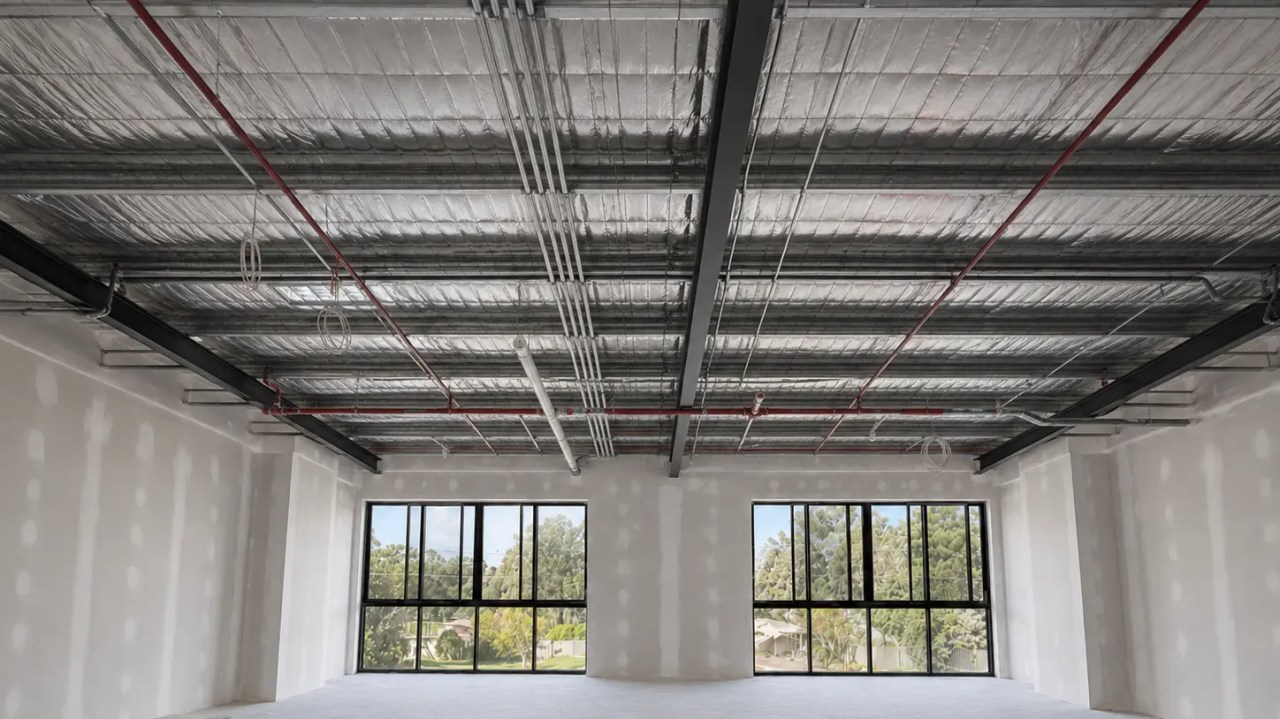
Heat naturally moves from hot to cold. On a Perth summer afternoon, a dark roof surface can become far hotter than the air outside. Without effective ceiling insulation, that stored roof heat transfers through the roof space, ceiling lining and into bedrooms below.
The basic relationship is:
A thicker batt can achieve a higher R-value, but thickness alone is not the measure of performance. Two products of equal thickness can have different R-values because their fibres, density and thermal conductivity differ.
There are two terms homeowners should separate:
-
Material R-value: The rating printed on the insulation pack, such as R4.0 or R5.0.
-
Total system R-value: The resistance of the complete roof or ceiling assembly, including plasterboard, air spaces, roof cladding and reflective layers where correctly installed.
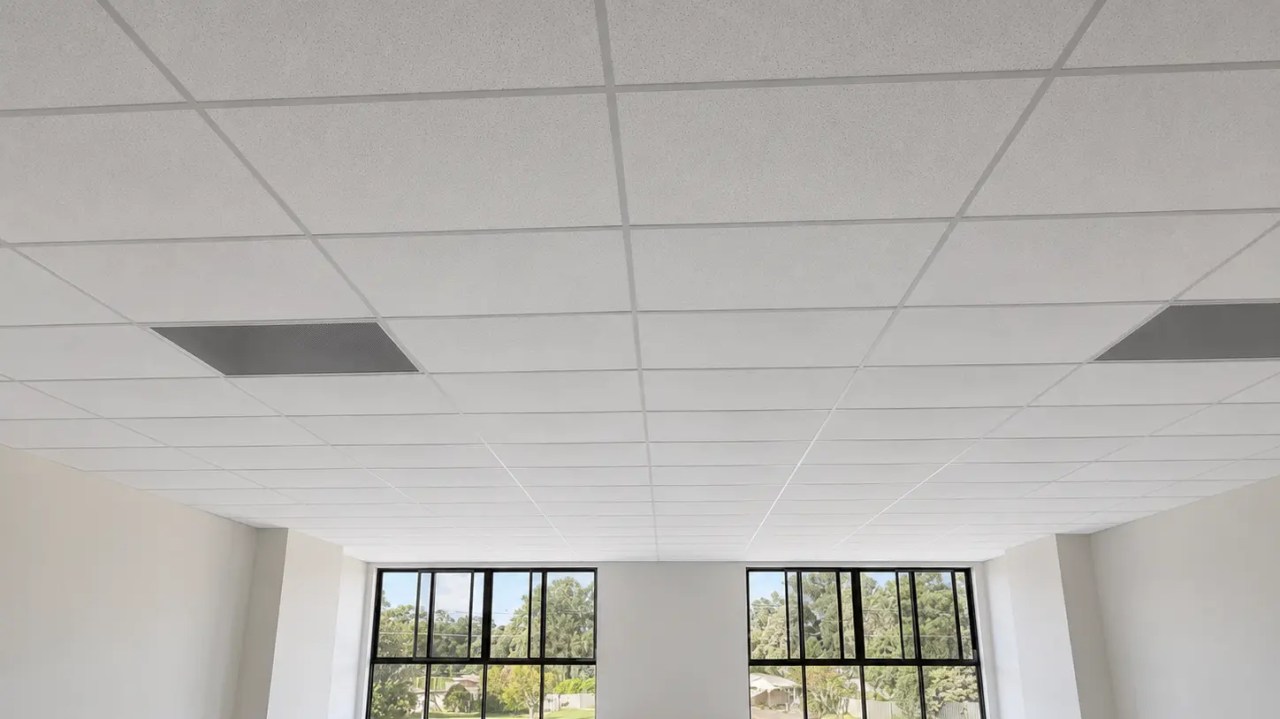
A Gyprock ceiling, roof sarking and ceiling batt work as a system. However, no thin reflective layer should be treated as a substitute for properly fitted bulk insulation over the ceiling plane.
How Do R4.0 and R5.0 Insulation Differ?
R5.0 provides 25% more thermal resistance than R4.0, while R4.0 allows heat to pass through the insulation layer 25% faster than R5.0 under the same conditions.
The distinction is meaningful, but it is not magic. R5.0 does not make a poorly shaded, west-facing room immune to afternoon heat. It reduces one major route of heat gain: the ceiling.
Moving from R3.0 to R5.0 cuts the conductive heat flow through the insulation layer by about 40%:
That does not mean a 40% reduction in the total electricity bill. Air conditioning also responds to windows, wall exposure, air leakage, occupants, appliances, ducts and thermostat habits.
In real roof spaces, the product thickness matters because of clearance. Some R4.0 ceiling batts are about 195 mm thick, while R5.0 products may be around 210 mm, depending on manufacturer and product line. The installer must confirm that the batt can recover to its designed thickness without being compressed against roof members, ductwork or stored items.
Which R-Value Is Best for Perth Homes?
R5.0 is often the best all-round ceiling insulation choice for owner-occupied Perth homes, while R4.0 remains suitable where cost or cavity constraints are tight. The right selection must match the home’s energy assessment and roof-space conditions.
Perth has hot, dry summers, strong solar exposure and cool winter nights. Ceiling insulation is therefore a high-priority upgrade because the roof is usually the home’s most exposed external surface.
Choose R4.0 when:
-
The home is a rental, short-term hold or budget-led renovation.
-
Existing roof trusses, low pitch or services make thicker batts impractical.
-
The current ceiling has little or no insulation and the priority is a major first-step improvement.
-
The house already has effective external shading and efficient cooling.
Choose R5.0 when:
-
You expect to remain in the property for several years.
-
Bedrooms heat up late in the day under a tiled or metal roof.
-
Air conditioning runs for extended summer periods.
-
The roof space is accessible now, making the upgrade cheaper than revisiting it later.
-
You are upgrading ceiling fans, duct sealing, window shading or solar at the same time.
For a new home in Western Australia, do not choose a batt solely because a brochure calls it “recommended.” The applicable National Construction Code pathway and the project energy report determine the required whole-of-home performance. A nominal R-value is not automatically the same as the required total R-value for the roof system.
Why Does Installation Quality Matter More Than Extra Thickness?
A continuous R4.0 installation can outperform a nominal R5.0 installation with large gaps, compression or disturbed batts. Insulation only works at its labelled rating when it is dry, fully lofted and installed continuously.
On ceiling upgrades, the recurring failures are rarely caused by the batt label. They come from details missed in the roof space.
At CeilingPro, we see the same issues after electricians, solar installers and duct contractors have worked above a ceiling:
-
Batts pulled aside and never reinstated.
-
Narrow strips left uncovered along wall plates.
-
Batts packed tightly around ducts until their loft is lost.
-
Downlight clearances ignored or improvised.
-
Old loose-fill or degraded insulation left beneath new batts without assessment.
-
Wet insulation retained after a roof leak.
A 20 mm gap beside several batt runs may look minor from the manhole, but it creates a direct thermal bypass. Heat does not spread evenly and politely through a ceiling. It follows the easiest available path.
The practical rule is simple: cut batts accurately around obstructions, butt edges firmly without force, and maintain full thickness. Never squash a 210 mm batt into a 150 mm gap and still expect its printed R5.0 performance.
Can Cooling Degree Days Calculate R5.0 Savings?
Yes. Cooling Degree Days estimate how much cooling weather occurs over a year and can be used to model insulation savings. They provide a transparent estimate, but they cannot replace a home-specific energy assessment.
Cooling Degree Days, or CDD, add the difference between the outdoor daily mean temperature and a chosen comfort base temperature. For a cooling-focused calculation, a common Australian weather-data base is 18°C or 24°C. Use one base consistently; the result changes substantially with the selected base.
For a Perth planning estimate, use a cooling-season range of 650–900 CDD at an 18°C base, then adjust after obtaining local Bureau of Meteorology data for the property area.
The annual cooling load avoided by an R3.0-to-R5.0 ceiling upgrade can be approximated as:
Where:
-
AA = insulated ceiling area in m²
-
CDDCDD = annual Cooling Degree Days
-
24 converts days to hours
-
Result = thermal kWh avoided before air-conditioner efficiency
For a 150 m² ceiling, 700 CDD and a reverse-cycle system with an average seasonal efficiency of 3.5:
At an electricity usage rate of about 33.26 cents per kWh, that is approximately:
This is a cooling-only, conduction-only estimate. It deliberately excludes winter heating savings, roof-space ventilation effects, thermostat behaviour and reduced peak-load discomfort.
Could R3.0 to R5.0 Save Money Within Five Years?
For a typical 150 m² home, R3.0-to-R5.0 savings from cooling alone may be roughly $145 to $240 over five years, depending on cooling weather, air-conditioner efficiency and electricity price. The stronger five-year value is usually comfort plus avoided future retrofit labour.
Using the same 150 m² example, the range looks like this:
The honest answer is that R5.0 should not be sold as a guaranteed five-year payback on cooling alone. If the incremental installed cost is high, the direct electricity payback can be longer.
However, the calculation becomes more favourable when the house also uses winter heating, has poorly insulated rooms below the roof, or needs the ceiling opened for other work. The marginal material cost of choosing R5.0 while the crew is already in the roof space is normally far lower than paying for a second installation visit later.
For CeilingPro clients, the most valuable outcome is often not the spreadsheet number. It is the bedroom that remains usable at 8 pm after a 40°C day, without needing the air conditioner to run at maximum output.
How Should You Upgrade Ceiling Insulation Safely?
A ceiling insulation upgrade should begin with a roof-space inspection, electrical safety check and moisture assessment. Install new insulation only after leaks, damaged wiring, unsafe fittings and access issues are resolved.
Use this sequence before selecting R4.0 or R5.0 insulation:
-
Measure the ceiling footprint rather than guessing from the building’s external area.
-
Inspect existing insulation for dampness, vermin contamination, settling and coverage gaps.
-
Identify roof leaks, condensate drains and penetrations before new batts are installed.
-
Have older or questionable wiring checked by a licensed electrician.
-
Confirm compatible clearances around recessed lights, flues, transformers and exhaust ducts.
-
Check the roof cavity depth and the location of ductwork.
-
Keep access pathways clear for future maintenance.
Do not cover bathroom exhaust outlets or allow insulation to block ventilation paths. Equally, do not create oversized uninsulated zones around every fitting; use approved barriers or fittings designed for insulation contact where the electrical design permits.
Where an older home has existing R2.0 or R3.0 batts that are dry and sound, topping up may be practical. Two layers can work well when the upper layer runs perpendicular to the lower layer, reducing gaps at joists and batt edges. The combined system must still avoid compressing the lower layer.
What Are CeilingPro Expert Views?
The best insulation upgrade is the highest practical R-value that can be installed continuously, safely and without compression. In many Perth roof spaces, that makes R5.0 a better decision than a cheaper batt that leaves performance on the table.
CeilingPro Expert Views
“In ceiling retrofits, we do not judge the job by how many packs went into the roof. We judge it by continuity. We have inspected homes with nominally high-rated batts where multiple service trades had left 10–15% of the ceiling uncovered around ducts, access points and wall lines. That can erase much of the benefit of paying for a higher rating. For a standard accessible roof cavity, R5.0 is usually the sensible upgrade point—but only when it can recover to full height and every cut, edge and penetration is handled properly. If the roof leaks, ducts are unsealed or west-facing glass is unshaded, solve those issues alongside the insulation rather than expecting one product to carry the entire thermal load.”
When Should You Consider R6.0 Instead?
R6.0 can be worthwhile for a new build, a major renovation or a home with intense roof exposure, but it is not automatically the highest-value choice for every existing house. Space and installation quality decide whether the extra resistance performs.
Consider R6.0 or higher when:
-
The ceiling is being installed before the Gyprock lining is fixed.
-
The roof has broad, unshaded exposure and regularly overheats upper rooms.
-
You are pursuing a high-performance design rather than a minimum compliance outcome.
-
The roof structure provides enough space for the batt to loft fully.
-
You have already addressed major window shading and air leakage pathways.
Avoid specifying R6.0 merely because “more is always better.” In a crowded roof cavity, compressed R6.0 can deliver less real-world performance than correctly fitted R5.0. CeilingPro recommends checking cavity depth, service congestion and roof access before finalising the product.
What Are the Most Important Takeaways?
R-value is a measure of thermal resistance, not a marketing label for batt thickness. For Perth homes, R4.0 provides a capable baseline, while R5.0 is commonly the stronger long-term choice for ceiling comfort and energy performance.
Before upgrading, measure the ceiling area, inspect existing insulation, repair water-entry issues and assess electrical and ductwork clearances. Use the CDD formula to estimate savings honestly, but assess comfort, peak summer performance and future labour costs alongside the electricity calculation.
A continuous, dry and uncompressed R5.0 installation will usually deliver more value than a poorly fitted higher-rated product. Start with the roof space, not the sales brochure.
What Are Common R-Value Questions?
Is R5.0 insulation 25% better than R4.0?
R5.0 has 25% more thermal resistance than R4.0. In heat-flow terms, R5.0 reduces conduction through the insulation layer by about 20% compared with R4.0, assuming both are installed correctly.
Can I place R5.0 batts over existing R3.0 insulation?
Yes, if the existing insulation is dry, clean, in reasonable condition and not compressed. The roof space must still maintain safe clearances around electrical fittings, flues, ducts and access paths.
Does ceiling insulation reduce noise?
Bulk ceiling insulation can reduce some airborne noise, especially rain and external sound, but thermal R-value is not a complete acoustic rating. Use a product selected for acoustic performance when noise control is the primary objective.
How long does ceiling insulation last?
Quality ceiling batts can perform for decades when they remain dry, undisturbed and correctly installed. Roof leaks, vermin, compression and trade damage are the main reasons to inspect or replace insulation.
Can insulation solve a hot west-facing room?
It helps, but it cannot solve the whole problem alone. West-facing glass, inadequate external shading, air leakage and poorly sealed ducts can create more heat gain than the ceiling in some rooms.