
How Do Thermal Breaks Protect Steel-Framed Colorbond Roofs?
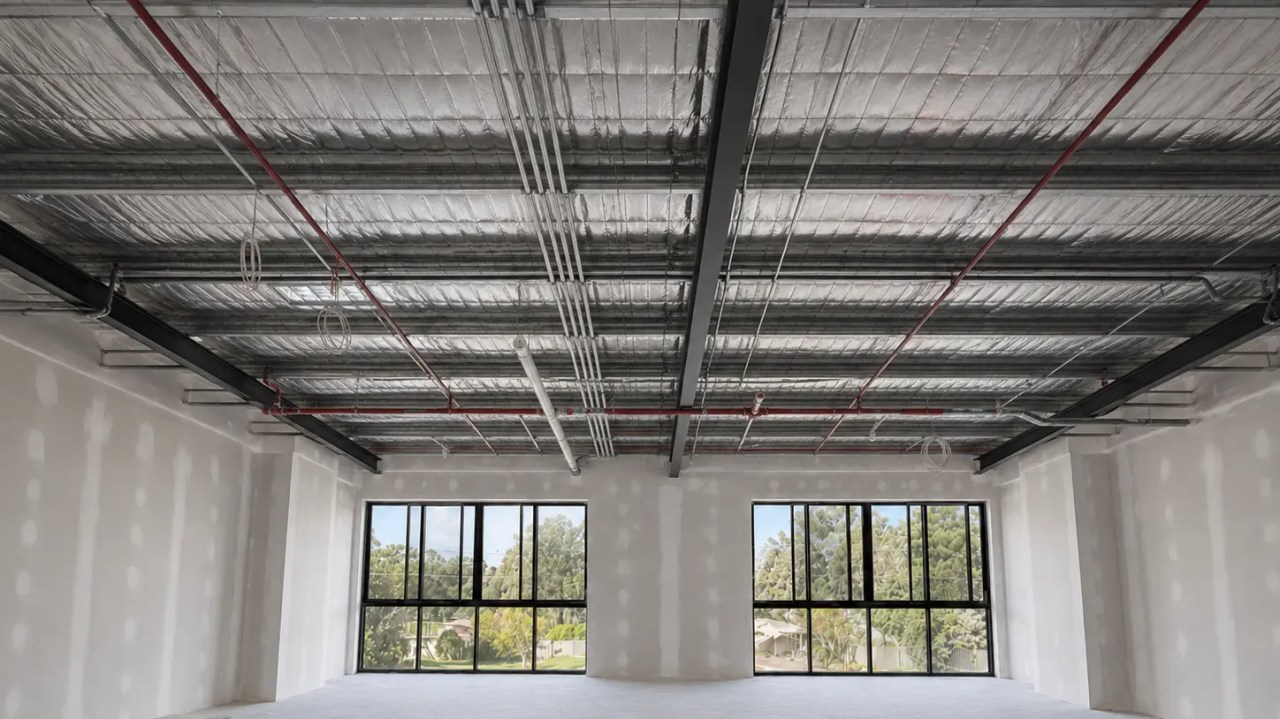
A continuous thermal-break layer beneath Colorbond or Zincalume roofing reduces direct heat flow through steel purlins, limits cold-sheet condensation and improves comfort. For Perth steel-framed roofs, Anticon foil-faced blanket insulation must run continuously between…

thermal break insulation for steel roofs
What Is a Thermal Break in a Steel-Framed Roof?
A thermal break is a low-conductivity insulating layer that separates metal roof sheeting from steel purlins, battens or framing. It interrupts the direct path through which heat and cold travel rapidly across connected steel components.
In a conventional steel-framed roof, Colorbond or Zincalume sheeting is screwed directly through to steel purlins. Every fixing point becomes a small but highly conductive bridge. During a Perth summer, solar-heated roof sheeting can transfer heat into the structure quickly. On cold nights, the reverse effect can make the inside face of the sheet cold enough for humid internal air to condense.
Anticon roofing blanket helps create the required separation because its glasswool blanket sits between the metal cladding and support structure. The foil face also contributes to condensation control when laps, penetrations and perimeter details remain continuous.
A roof system should not be assessed by insulation thickness alone. The continuity of the insulation layer matters just as much. A high-rated ceiling batt installed below a roof frame cannot fully stop heat travelling through exposed steel purlins above it.
How Does Steel Thermal Bridging Cause Condensation?
Steel thermal bridging occurs when a continuous metal path carries temperature from the external roof sheet into the roof cavity. Condensation develops when moist air contacts a surface below its dew-point temperature.
In practical terms, warm air inside a home, warehouse or enclosed patio rises toward the roof. If a cold Zincalume sheet or an uninsulated steel purlin is exposed to that moisture-laden air, water vapour can become liquid droplets. Those droplets may drip onto ceiling insulation, plasterboard, electrical services, stored goods or framing.
In Perth and across Western Australia, the issue is not limited to winter. Condensation can occur after cool nights, during rapid weather changes, or in spaces with high indoor humidity, such as laundries, kitchens, workshops and enclosed commercial areas.
The critical detail is the contact path:
Incorrect roof build-up:
Metal roof sheet → steel purlin → steel frame
                    ↑
          Continuous heat and cold bridge

Correct thermal-break build-up:
Metal roof sheet
       ↓
Anticon foil-faced glasswool blanket
       ↓
Steel purlin / roof framing
       ↓
Internal roof cavity and ceiling insulation
The blanket must be compressed only enough at the fixing line to secure the roof system. It should not be crushed across the full purlin width, torn around screws or omitted at laps. Excessive compression reduces its insulating thickness and can create a recurring bridge line across the roof.
Why Is Anticon Effective Under Colorbond Roofing?
Anticon is effective because it combines a glasswool insulation blanket with a reflective foil facing, providing bulk insulation, radiant-heat control, acoustic absorption and condensation management in one roof layer.
For Colorbond roofing in Perth, the foil-facing layer reflects a substantial proportion of radiant heat when the roof assembly includes an adjacent air space. The glasswool component slows conductive heat transfer, while the continuous foil face helps separate humid roof-cavity air from the underside of cold metal sheeting.
The benefit is especially noticeable in roofs with large unshaded exposures. Darker roof colours, low-pitch roofs, wide-span patios and warehouses can all experience intense heat loading. In our work on steel-roof projects, we have seen roof cavities become uncomfortable long before ceiling insulation is installed simply because the metal sheet is radiating heat directly downward.
Anticon is not a substitute for ceiling insulation. It is the first line beneath the roof sheeting; ceiling batts are a separate layer that improves the overall roof-and-ceiling performance.
| Roof component | Primary role | Common installation failure |
|---|---|---|
| Colorbond or Zincalume sheet | Weatherproof external cladding | Direct contact with steel supports |
| Anticon blanket | Thermal break, condensation control and noise reduction | Torn foil, unsealed laps or excessive crushing |
| Steel purlins or battens | Structural support and fixing base | Exposed contact lines without insulation separation |
| Ceiling insulation | Limits heat flow into occupied rooms | Gaps around services or compressed batts |
| Ceiling lining, including Gyprock | Internal finish and air separation | Moisture staining caused by roof-space condensation |
Which Anticon Thickness Suits a Perth Metal Roof?
The suitable Anticon thickness depends on roof geometry, purlin spacing, roof colour, building use, ceiling insulation and condensation risk. Typical residential and light-commercial selections often fall within 50 mm to 80 mm blanket ranges, but the final specification must suit the complete roof system.
A thin blanket may be easier to handle over close purlin spacing, but it provides less bulk insulation and acoustic damping. A thicker blanket improves thermal resistance and rain-noise reduction but can be compressed more heavily at fixing lines if the roof profile, screw length and installation method are not planned properly.
For a ventilated Perth home with ceiling insulation, a standard foil-faced blanket may form an effective thermal break beneath the roof sheet. For a warehouse, studio, shed conversion or building with exposed internal roof framing, the blanket specification requires closer attention because the roof layer may be doing most of the thermal work.
CeilingPro reviews roof pitch, span, purlin layout and internal moisture sources before recommending a practical build-up. A blanket that performs well in a ventilated residence may not be enough for a humid commercial workspace with limited roof ventilation.
How Should Anticon Be Installed Over Steel Purlins?
Anticon should be rolled continuously over the steel purlins before the roof sheets are fixed, with the foil face correctly oriented for the selected product and installation system. Roof sheeting is then installed over the blanket so the insulation layer separates sheet metal from the structural steel.
The installation sequence matters more than many owners realise:
- Confirm purlins are aligned, clean and free of sharp edges that could tear foil.
- Roll the Anticon blanket across the roof framing without gaps at side laps.
- Maintain adequate tension so the blanket sits evenly rather than sagging into deep troughs.
- Lap and seal foil joints according to the product and roof-system requirements.
- Install roof sheeting without dragging sharp sheet edges across the foil facing.
- Use fixings suitable for the combined sheet, blanket and purlin assembly.
- Detail penetrations, flashings, ridge areas and eaves so the vapour-control layer remains continuous.
The installation should be coordinated before cladding arrives on site. Retrofitting a true thermal break beneath an existing metal roof generally means removing roof sheets. Stapling foil or foam products to the underside afterward may provide some radiant benefit, but it does not remove the direct sheet-to-purlin contact that causes structural thermal bridging.
What Failures Commonly Ruin Metal-Roof Insulation?
The most common failures are discontinuous foil laps, crushed blanket insulation, torn facings, unsealed service penetrations and assuming roof insulation alone will solve excessive indoor humidity.
In the field, the most damaging defects are often small. A 50 mm tear beside a flue, skylight curb or roof penetration can allow moist air into the roof assembly. A poorly lapped foil seam can become a condensation track. A blanket dragged across sharp steel edges may look acceptable from below but have hidden damage where it matters most.
Another common mistake is creating a good roof layer but allowing warm, humid air from bathrooms, kitchens or laundries to discharge into the roof cavity. Exhaust fans must terminate to the exterior, not into the ceiling space. Insulation cannot compensate for uncontrolled moisture production.
CeilingPro also sees problems where installers over-tighten sheets across a thick blanket. The roof should remain structurally secure, but the blanket should not be flattened across every support line to the point that it loses effective thickness over most of its area.
Does Anticon Stop Summer Heat and Rain Noise?
Anticon substantially reduces radiant heat entering the roof cavity and softens rain noise, but it does not eliminate heat gain or make a roof silent. Its performance depends on the entire building envelope, including roof colour, ventilation, ceiling insulation, glazing and air leakage.
A light-coloured Colorbond roof, correctly installed Anticon blanket and well-fitted ceiling insulation will generally outperform a dark roof with only ceiling batts. The difference becomes clear in Perth’s hot summers, particularly in top-floor bedrooms, home offices and steel-roof workshops exposed to afternoon sun.
For rain noise, the glasswool blanket absorbs some of the vibration and sound energy from rain striking the metal sheeting. It is most helpful in rooms with minimal ceiling cavity depth, exposed steel-roof designs and commercial buildings where roof noise disrupts communication.
However, no insulation product fixes structural rattles. Loose flashing, poorly restrained sheets, unsupported penetrations and vibrating services should be repaired separately.
Why Must Perth Roofs Address Moisture as Well as Heat?
Perth roofs must manage both heat and moisture because a roof can experience severe solar loading during the day and cold external sheet temperatures at night. These temperature swings can create conditions for condensation when internal humidity is present.
Western Australia’s climate is often described as dry, but that does not remove condensation risk. A building generates moisture through showers, cooking, drying clothes, occupants, cleaning processes and certain commercial activities. If that moisture reaches a cold metal surface, it can condense regardless of the broader outdoor climate.
For steel-framed homes, the risk is amplified because steel conducts temperature much faster than timber. This does not mean steel framing is unsuitable; it means the thermal-break detail must be treated as a system requirement rather than an optional upgrade.
CeilingPro recommends reviewing ventilation pathways, exhaust discharge points, roof leaks and ceiling penetrations alongside the insulation specification. Condensation symptoms can have several overlapping causes, and treating only one of them may not solve the problem.
How Can CeilingPro Improve a Steel Roof Build-Up?
CeilingPro improves steel-roof build-ups by assessing the roof as a connected system: cladding, thermal break, structure, ventilation, ceiling insulation, internal linings and moisture loads. This avoids the common mistake of specifying a product without resolving the installation detail.
For new builds and re-roofs in Perth, CeilingPro can help coordinate insulation placement before Colorbond or Zincalume sheets are fixed. For existing properties, the team can identify whether staining, dripping or mould risk is caused by condensation, roof leaks, blocked ventilation, damaged insulation or moisture entering from internal exhausts.
This approach is particularly useful in commercial fit-outs and warehouses, where roof cavities can contain electrical trays, ductwork, sprinkler services and penetrations that interrupt insulation continuity. Each opening should be planned, sealed and inspected rather than treated as a last-minute cut-out.
CeilingPro Expert Views
“On steel-framed roofs, the weak point is rarely the centre of the insulation blanket. It is usually the line where sheet, fixing and purlin meet, or the penetration that was cut after the roof was closed. We have inspected roof spaces where good-quality blanket insulation was installed, yet condensation still appeared because bathroom exhaust air entered the cavity or foil laps were left unsealed. In Perth, specify the roof blanket early, protect it during installation and inspect every roof penetration before internal ceilings are closed. The best result comes from continuity: continuous insulation, continuous foil detailing and controlled internal moisture.” — CeilingPro technical team
When Should You Upgrade an Existing Metal Roof?
Upgrade planning should begin when there are recurring ceiling stains, dripping during cold weather, visible corrosion beneath sheets, hot rooms below the roof, mould concerns or a scheduled roof replacement. A re-roof is the most effective time to install a true thermal-break blanket.
If existing Colorbond or Zincalume roofing remains in good condition, CeilingPro can assess options such as improving ceiling insulation, sealing ceiling penetrations, correcting exhaust ducting and upgrading roof ventilation. These measures may improve comfort and reduce moisture risk, but they do not replicate a continuous blanket installed between the sheet and purlins.
For buildings due for replacement cladding, include the thermal break in the scope from the outset. The extra coordination is modest compared with the cost and disruption of removing newly installed roof sheets later.
What Are the Key Takeaways for WA Steel Roofs?
A steel-framed Colorbond or Zincalume roof needs more than ceiling batts to manage heat and condensation effectively. The essential detail is a continuous thermal-break layer between metal sheeting and steel supports.
For the best result in Perth and wider WA:
- Install Anticon or an appropriate foil-faced roofing blanket directly beneath new metal roof sheets.
- Maintain continuity across purlins, laps, roof edges and penetrations.
- Avoid direct metal-to-metal contact wherever the roof sheet meets steel framing.
- Combine the roof blanket with correctly installed ceiling insulation.
- Send bathroom, kitchen and laundry exhausts outside, not into the roof cavity.
- Investigate leaks, damaged flashing and ventilation issues before blaming insulation.
- Plan thermal-break detailing before roof cladding is installed.
A well-detailed roof stays more comfortable through Perth summers, reduces the likelihood of condensation damage and gives ceiling insulation a drier, more effective environment in which to perform.
FAQs
Can Anticon be installed under an existing Colorbond roof?
It can sometimes be installed from below for limited thermal or acoustic improvement, but it cannot fully create the sheet-to-purlin thermal break achieved during a re-roof. The most complete installation occurs before roof sheets are fixed.
Does a steel-framed roof always need a thermal break?
Steel framing creates highly conductive paths, so a thermal-break strategy is strongly recommended. The exact requirements depend on the building design, applicable NCC provisions, roof system and energy-efficiency assessment.
Will Anticon replace ceiling insulation?
No. Anticon works beneath the roof sheet, while ceiling insulation provides another major resistance layer above the internal ceiling. Using both creates a more balanced roof assembly.
Can condensation still occur with Anticon installed?
Yes. Anticon reduces risk but cannot solve roof leaks, damaged foil laps, unsealed penetrations, excessive humidity or exhaust fans venting into the roof cavity.
Is Anticon suitable for Zincalume roofing?
Yes. Foil-faced roofing blankets are commonly used beneath both Zincalume and Colorbond metal roofing, provided the product and installation details suit the roof design.
Related articles
 28 Course Ceiling Height in Metres: How the Numbers WorkCeiling Design, Features & Heights
 Repair a Hole in Plasterboard: Matching the Method to the DamageCracks, Holes & Plasterboard Patching
 Thermal Facade Insulation Systems in Perth: Where They BelongKnowledge
 Cold Insulation Perth: Cold Rooms, Freezers and Refrigerated SpacesKnowledge