
How much does ceiling insulation cost in Perth in 2026?
Ceiling insulation in Perth typically costs between $13 and $37 per square metre fully installed in 2026, depending on material type, R-value, and access conditions. DIY materials alone usually range from about $10 to…

Ceiling insulation in Perth typically costs between $13 and $37 per square metre fully installed in 2026, depending on material type, R-value, and access conditions. DIY materials alone usually range from about $10 to $20 per square metre, while licensed installation adds labour of roughly $40 to $60 per square metre. For an average 3‑bed Perth home, total ceiling insulation costs commonly sit around $1,500 to $2,500.
What is the average per‑square‑metre price for ceiling insulation in Perth?
For standard bulk ceiling batts in Perth, installed prices in 2026 typically sit between $13 and $37 per square metre, with most residential jobs clustering around the mid‑$20s per square metre mark. This range usually includes materials, labour, GST, and basic site preparation for an accessible roof space.
Perth pricing in Western Australia is driven by a combination of local labour rates, transport, and WA-specific stock costs for brands like Earthwool, Bradford and similar bulk batts. In practice, CeilingPro often quotes in the mid-range of this band, adjusting for roof complexity, cavity height, and whether top-up or full replacement is required. Because Perth homes vary widely from 1960s double-brick to new lightweight framed construction, the per‑square‑metre figure is only meaningful once the total area and R-value are locked in.
How does DIY insulation cost compare with professional installation in Perth?
DIY ceiling insulation in Perth generally costs $10 to $20 per square metre for bulk batts, depending on R-value and brand, plus minor tool and safety gear expenses. Professional, licensed installation typically lands between $40 and $60 per square metre once materials, labour, and overheads are included.
From a trade perspective, the DIY saving mostly comes from removing labour charges, but you trade that for time, handling risk, and potential re-work if coverage or vapour control is poor. CeilingPro technicians routinely see DIY jobs where batts are compressed, gaps around downlights are unsafe, or existing vermin damage was not properly cleared, which later forces a costly rectification. In Perth’s hot-summer climate, missing just 10–15% of coverage over a ceiling can noticeably reduce performance, eroding the apparent DIY savings over the life of the system.
Perth 2026 ceiling insulation cost snapshot
Values reflect typical Perth / WA residential projects in 2026 and assume reasonable roof access.
Which key factors cause Perth ceiling insulation prices to increase or decrease?
Ceiling insulation costs in Perth shift mainly with material type, R-value, roof access, and whether the job is new-build or retrofit. Higher thermal ratings and specialty products such as spray foam or multi-layer foil generally push the per‑square‑metre rate toward the top of the local price bands.
On the factory side, bulk batt pricing is driven by thickness, fibre density, and whether the product is engineered for tight WA cavities or wider truss spacing seen in older Perth suburbs. Installers like CeilingPro also factor in working at heights, removal of old batts, and safe clearance around services such as halogen downlights, exhausts, and wiring, all of which add to labour time and overall cost. For commercial sites around Perth and wider Western Australia, night work or crane access can further increase pricing compared with a straightforward suburban roof space.
Why is properly rated ceiling insulation important for Perth’s hot summers and WA building standards?
Correctly rated ceiling insulation is critical in Perth because hot, dry summers drive roof-space temperatures far higher than indoor comfort levels. Effective batts or combined bulk-and-foil solutions significantly reduce cooling loads, making air conditioning systems run shorter cycles and improving overall energy efficiency.
Under Western Australian practice, typical new homes often target higher R-values in the ceiling than in the walls to counter strong solar gain and roof mass. From my technical experience, underspecifying the ceiling while overspending on wall batts is a common mistake in WA projects; the ceiling is where you see the fastest real-world payback in both summer comfort and winter stability. CeilingPro’s design team routinely models roof build‑ups to ensure batts, foil sarking, and ventilation complement each other, not compete, particularly in Perth’s coastal suburbs where sea breeze and humidity patterns interact with roof performance.
How are ceiling insulation options in Perth priced by material type and R‑value?
Bulk glasswool or mineral wool batts remain the most cost-effective choice in Perth, usually priced from $10 to $20 per square metre for common R-values when purchased as materials only. Foil or reflective wraps are cheaper per square metre at roughly $5 to $15 but need to be part of a system, not used as a standalone thermal layer in most WA roof constructions.
Spray foam and blown-in products sit at the premium end of the market, often starting around $25 per square metre for materials and climbing above $50 per square metre installed due to specialised application equipment. In practice, CeilingPro generally recommends bulk batts for most Perth residential ceilings, stepping up to hybrid batt-plus-foil assemblies or high-density products only where cavity depth, roof pitch, or acoustic targets justify the extra spend. Matching R-value to cavity thickness and fixing method is crucial; compressing batts to “fit” a tight WA roof void cuts their thermal performance and wastes money.
Typical Perth 2026 material price ranges by type
Indicative ranges based on typical Australian and Perth-focused 2026 price guides and supplier data.
Are DIY ceiling insulation projects in Perth safe and cost‑effective?
DIY ceiling insulation can be cost‑effective for simple, single‑storey Perth homes with generous roof access and lightweight roof structures. However, it introduces risks around electrical safety, working at heights, and correct handling of existing batts that may be dusty, vermin‑affected, or non‑compliant with WA standards.
From an installer’s viewpoint, many DIY jobs underperform because batts are loosely thrown into place, with gaps at the eaves, around downlights, and across ceiling joist intersections. In Perth’s hot conditions, small gaps amplify thermal bridging, so a nominal R4.0 ceiling can behave closer to R2.5 in practice. CeilingPro crews follow structured layout sequences, marked service zones, and safe clearance protocols; that process is difficult to replicate on a Saturday afternoon without trade experience and proper documentation.
Why might a Perth homeowner choose a licensed contractor like CeilingPro instead of DIY?
Homeowners in Perth often opt for licensed installers because ceiling insulation must perform safely for decades, not just look “covered” on day one. Engaging a contractor such as CeilingPro gives you documented product selection, compliance with WA practice, and labour warranties if something later requires adjustment or repair.
Professionally run crews also coordinate insulation with other services—lighting, ducting, access hatches, and future maintenance pathways—so the ceiling system can be serviced without constantly disturbing batts. In many Western Australian projects, the real economic value is in avoiding re‑work: one poorly handled inspection or renovation can undo DIY efforts, whereas a planned CeilingPro installation anticipates future trades and keeps the roof space logically organised. From a technical standpoint, anything that reduces unnecessary movement across Gyprock ceilings or minimises penetrations lowers the risk of cracking and future maintenance.
What specific ceiling and roof configurations in Perth tend to increase insulation installation costs?
Certain Perth roof configurations push costs above typical per‑square‑metre rates, especially older double‑brick homes with low-pitch skillion roofs or tight, low-clearance cavities. Multi-level homes, raked ceilings, and integrated cathedral spaces also demand more labour and sometimes custom-cut materials.
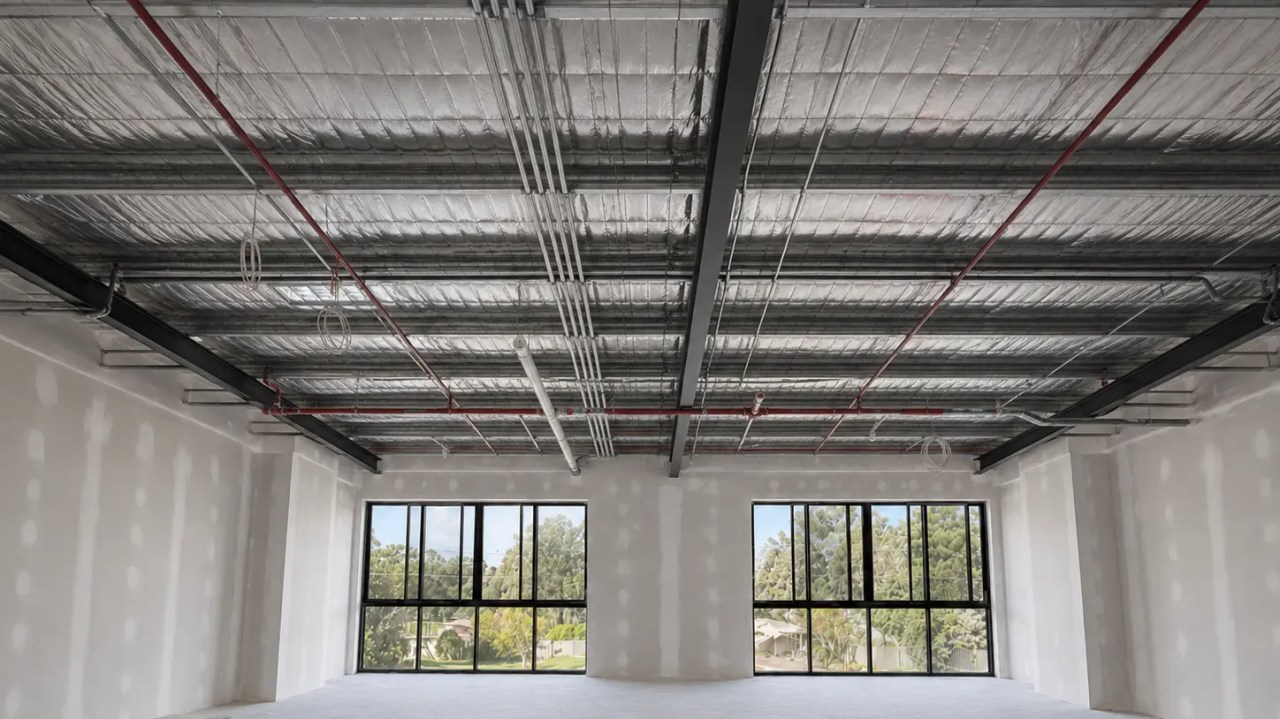
In Western Australia’s commercial sector and high-end residential builds, structural steel framing and complex roof geometries require specialised fixings, working at height systems, and staged access, all of which add cost beyond the raw material per square metre. CeilingPro teams typically pre‑survey these sites with digital measurement tools and cavity mapping, which keeps surprises—and variations—under control but does translate into more detailed upfront planning than a simple suburban install. From a technical standpoint, anything that restricts movement or forces cutting around many penetrations will increase labour minutes per square metre and thus total job cost.
When is the best time for Perth homeowners to install or upgrade ceiling insulation?
The most economical time to install ceiling insulation in Perth is during construction or major renovation, when the roof space and ceiling framing are fully accessible. Pre‑lining installation allows batts, foil, and services to be coordinated without crawling in confined, dusty cavities later.
For existing homes across WA, autumn and early winter can be advantageous because demand is rising but roof spaces are cooler and safer to work in than peak summer. CeilingPro frequently schedules major retrofits outside the hottest months to protect crews and reduce the risk of heat stress in confined spaces, especially on darker roof profiles common around metropolitan Perth. Homeowners also experience immediate comfort gains when insulation is upgraded just before winter or a forecast heatwave period.
Where do Perth and WA building practices influence insulation choices and pricing?
WA building practice strongly shapes insulation choices through typical construction types, including double‑brick outer walls, timber or steel roof framing, and popular materials such as Gyprock for internal linings. These systems create specific cavity depths and fixing points that influence which batts, wraps, and accessories are practical.
Gyprock ceilings on timber joists, for instance, respond well to bulk batts that friction‑fit between joists, while steel-framed commercial ceilings may require different clip systems and coordination with services grids. CeilingPro’s integrated construction approach—covering ceiling installation, wall partitions, insulation, and maintenance—means WA projects are costed as whole systems, not isolated line items, which often delivers better value across multi-trade jobs. Perth’s focus on environmental sustainability and energy performance also encourages higher R-values, which slightly lifts material cost but can reduce long-term operational expenses.
Does adding wall or underfloor insulation alongside ceiling insulation change overall project cost in Perth?
Yes, bundling ceiling, wall, and underfloor insulation in a single Perth project can change both total cost and per‑square‑metre rates. Ceiling batts are usually the most cost-effective upgrade, while wall and underfloor systems tend to be more expensive due to access and more detailed detailing.
Typical WA pricing shows wall insulation installed at a higher rate per square metre than ceiling insulation, and underfloor insulation also tends to cost more because working under floors often requires specialised access and safety controls. CeilingPro often recommends prioritising ceiling upgrades first for rapid comfort gains, then staging wall or underfloor works when other trades (plumbers, electricians, carpenters) are already opening wall or floor cavities for unrelated work. This coordinated approach reduces duplicated labour and brings overall project costs down compared with three separate visits.
CeilingPro Expert Views
From my experience on Perth sites, the cheapest insulation quote rarely delivers the best long-term result. The real value is in how precisely batts are detailed around penetrations, how existing Gyprock ceilings are protected during access, and how future maintenance is allowed for. At CeilingPro, we design every WA insulation job as part of a larger thermal and service ecosystem, not as a quick commodity install.
What are the key takeaways on ceiling insulation costs in Perth and how should WA homeowners decide between DIY and professional options?
In 2026, Perth homeowners can expect installed ceiling insulation costs around $13 to $37 per square metre, with DIY materials sitting near $10 to $20 per square metre. A typical 3‑bed home comes in at roughly $1,500 to $2,500 for a comprehensive, professionally installed ceiling upgrade.
When deciding between DIY and professional services in Western Australia, factor in not only price but also safety, long-term thermal performance, and compliance with WA-oriented building practice. DIY can be viable for simple roofs, but once you add tight cavities, complex services, or existing damage, the risk of underperformance climbs quickly. CeilingPro’s integrated expertise across ceiling installation, wall partitions, insulation, and general maintenance gives Perth clients a single point of accountability and a well-engineered solution that is likely to outperform ad-hoc DIY in both comfort and lifecycle cost.
FAQs
What R‑value is recommended for ceiling insulation in Perth homes?
Many Perth and WA guides suggest higher R-values for ceilings than walls, often R4.0 or above, to manage strong roof heat loads, though final choice depends on roof build‑up and energy goals.
How long does ceiling insulation installation take for a typical Perth house?
For an average single‑storey, 3‑bed home with good access, professional installers can usually complete ceiling insulation in one day, including preparation and clean‑up.
Can I just top up old insulation instead of replacing it entirely?
Top‑up is often possible if existing batts are dry, stable, and safely clear of services; otherwise, removal and full replacement may be safer and more effective in WA climates.
Does ceiling insulation help with noise as well as temperature in Perth homes?
Bulk batts provide meaningful acoustic dampening, reducing roof noise from rain and some traffic sounds, which is valuable near busy Perth corridors or commercial zones.
Are there any rebates or incentives for insulation upgrades in Western Australia?
Some schemes and programs periodically support energy-efficiency upgrades, but availability and conditions change, so WA homeowners should check current state or local offerings when planning projects.
Related articles
 28 Course Ceiling Height in Metres: How the Numbers WorkCeiling Design, Features & Heights
 Repair a Hole in Plasterboard: Matching the Method to the DamageCracks, Holes & Plasterboard Patching
 Thermal Facade Insulation Systems in Perth: Where They BelongKnowledge
 Cold Insulation Perth: Cold Rooms, Freezers and Refrigerated SpacesKnowledge