
Sagging Ceiling: What to Record, What It Means and What Happens Next
A sagging ceiling is evidence of a mechanism, not just a defect. How to measure a sag, when it is urgent, and how the repair is matched to the cause.
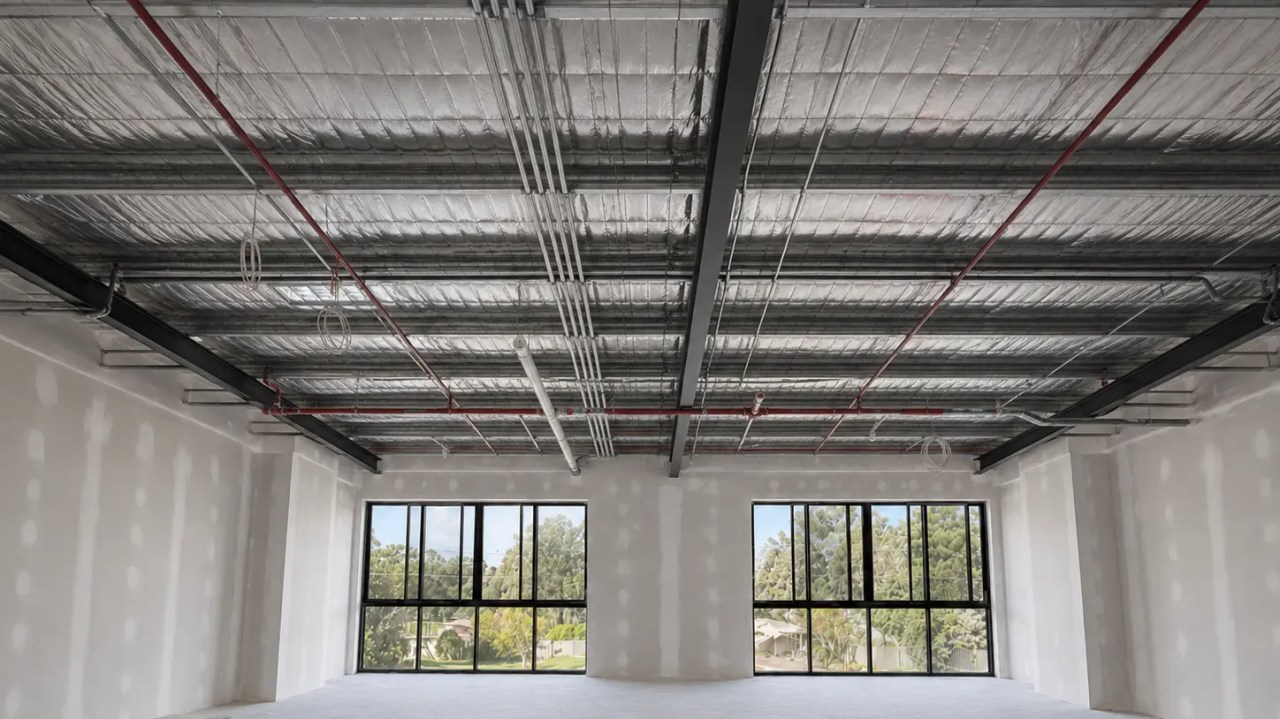
This page covers what to record, how the sag is measured and read, when the situation is urgent, and how the repair is matched to the cause.
What to Record Before Any Conclusion
Record the extent, the depth, the direction, the water history and the condition of the fixings, using a datum rather than an impression.
The measurement comes first. A straight edge or a string line is set across the affected area, and the depth of the dip is measured from it and recorded, with the perimeter of the sag marked on the ceiling with tape so the extent can be photographed and compared later. Measuring by eye produces a description rather than a figure, and the figure is what shows whether the sag is changing.
Direction is the second measurement. A sag that dips in one direction usually follows the framing or the support system, while one that dips in two directions forming a bowl usually indicates a local failure such as a fixing pattern or a patch of water damage. The direction also indicates which way water would travel if moisture is involved.
The water history and the fixing evidence complete the record. Staining, a damp smell, a history of leaks, and the age of any previous repair all belong in the file. Where the ceiling has been re-fixed or re-strapped before, that history explains why the same area is failing again, and it changes the recommendation from another repair to a replacement.
Reading the Evidence
Three mechanisms account for most sagging ceilings: failed fixings, added weight, and movement or failure in the support above.
| Finding | Likely mechanism | Next step |
|---|---|---|
| Local dip with a crack along the fixings | Fixing failure | Inspect fixings; re-fix or re-strap locally |
| Sag with staining and a damp smell | Water loading and possibly a failed lining | Find and stop the water; assess the lining |
| Sag across a whole room, deepening | Support or structural movement | Roof space inspection and specialist advice |
| Sag that returns after re-fixing | Cause was never addressed | Establish the mechanism before another repair |
Water is the most damaging mechanism because it works in two ways: it adds weight to the insulation and the lining, and it degrades the material itself, so a ceiling that has been wet may sag even after it has dried. Wet insulation is a particular problem because it stays wet longer than the lining and continues to load the ceiling above it.
Added weight from other sources is less obvious. Where insulation has been installed over a ceiling that was not designed for it, or where a previous repair added material, the lining carries a load it was not fixed for. Insulation should be supported by the structure rather than resting on the ceiling lining.
Fixing and support failure is the third. Over-driven fixings, corroded fixings, spacing that does not suit the lining, and straps or battens that have detached from the structure all appear in the roof space rather than from below. That is why the inspection above the ceiling is the stage that establishes the mechanism.
Repair, Overlay or Replace
Re-fixing suits sound lining with failed fixings, re-strapping suits a failed support system with sound lining, and replacement suits lining that has lost strength or a ceiling whose frame is being rebuilt.
Re-fixing from below is the least disruptive option, and it is appropriate where the lining is sound and the framing behind it is intact. The additional fixings have to reach the frame rather than only the lining, and the pattern has to suit the material. Where the sag has already stretched the lining, re-fixing may flatten the centre while leaving ripples.
Re-strapping addresses the support system. Where battens or straps have failed or corroded, adding fixings to the lining does not help because the support itself is no longer doing its job. This work is carried out from the roof space, which means the ceiling may remain in place and the repair is largely above it.
Replacement is the answer where the lining has lost strength over an area, where the damage is extensive, or where the ceiling is being rebuilt for another reason such as adding insulation or resolving a fire separation. It is also the answer where a repair has already been attempted and the sag returned, because the mechanism was never addressed. Where an older ceiling or its coating may contain asbestos-containing material, the work stops until it has been assessed; the national guidance is published by the Asbestos Safety and Eradication Agency, and the state position by WorkSafe WA.
What the Scope of Works Should Contain
The scope separates the make-safe, the inspection, the cause repair, the ceiling works, the cornice and insulation and the finishing.
The make-safe is the first line and it is often the only work done before a cause is established: keeping the area clear, removing anything at risk, and where necessary propping or removing a section under the direction of a licensed contractor. It is recorded as temporary.
The inspection and cause repair follow, and they are the items that distinguish a lasting repair from a repeat visit. Where the mechanism is water, the water is stopped and the assembly is dried and assessed; where it is the support system, that system is reinstated before the lining is refixed; where it is structural movement, the structural question is resolved first.
The ceiling works, cornice, insulation and finishing close the scope, and each boundary should be stated. A scope that names only the re-fixing leaves the cornice, the insulation and the coating to be argued over later. The installation requirements for the reinstated lining sit in the National Construction Code, with the lining standards published through Standards Australia.
Insurance, Strata and Approval Paths
Insurance and strata work is decided on documentation, and the failed ceiling is itself part of the evidence, so the record is taken before anything is removed.
The evidence set covers the date the sag was noticed, photographs with a scale, the measured depth and direction, the moisture history, the condition of the fixings and support once visible, and the findings in the roof space. For a strata property, the additional item is whether the affected ceiling and the cause are within the lot or on common property.
The scope then describes what will be reinstated and to what standard, in stages, with boundaries named. Insurers and owners corporations approve scopes rather than conversations, and ambiguity at those boundaries tends to surface after the ceiling is closed.
Contractors cannot predict claim outcomes, and CeilingPro does not attempt to. What can be done is to record the condition accurately and describe the scope in stages. Where the work requires approval, the framework for building approvals in Western Australia is published by Building and Energy.
When a Sagging Ceiling Is an Emergency
A ceiling is an emergency when it is bulging rather than dipping, when material is falling, when water is still entering, or when the lining has begun to detach.
The signs to act on are a pronounced downward bulge, dust or debris falling from the ceiling, the lining visibly separating from the cornice or the wall, cracks widening over days rather than seasons, and any continuing water flow. Where a sag is accompanied by a bulging area holding water, the weight is significant and the risk of a section coming down is real.
What to do in that situation is to keep people clear, move what can be moved from below the area and arrange for a licensed contractor to assess it. What not to do is to attempt to prop, screw or cut the ceiling yourself, or to enter the roof space to look. Sagging ceilings, collapse risk, roof space access and electrical work in that space require licensed trades and inspection.
Where the ceiling has been made safe temporarily, the temporary measure is recorded so the permanent repair can be planned from it. A prop or a removed section is part of the history of the ceiling and belongs in the record with the measurements and photographs. For related work, see the repairs and maintenance service page, with further guides under knowledge.

What Changes After the Repair
What changes is the support, the record and the conditions that determine whether the ceiling holds.
The support changes where the mechanism has been addressed: fixings replaced with the right type and spacing, straps or battens reinstated, water stopped and the assembly dried. Where the mechanism was not addressed, the repair is a postponement, and the record should say so.
The ceiling itself changes where lining has been replaced, and the new lining performs differently from the one that failed. Recording that, along with the insulation and any services reinstated, means a future assessment starts from the right baseline.
The record is the third change and the most durable. Knowing why the ceiling sagged, what was found above it and what was done means the next tradesperson does not repeat the diagnosis. It also supports any future claim, because the original condition is documented rather than described from memory.
Frequently Asked Questions
When should I worry about a sagging ceiling?
Treat it as urgent when the ceiling is visibly bulging rather than dipping, when dust or debris is falling, when water is still entering, when cracks are opening quickly, or when the lining has started to detach from its fixings. In those conditions keep the area clear and have a licensed contractor assess it.
Can a sagging ceiling be fixed?
In most cases yes, provided the cause is addressed rather than the surface. A ceiling that has sagged because of failed fixings can be re-fixed or re-strapped; one that has sagged because of water or a failed support system may need sections replaced. Where the cause is structural, that is resolved first.
Does home insurance cover a sagging ceiling?
That is a decision for the insurer and depends on the cause, the policy and its exclusions. Sudden events such as a burst pipe or storm damage are usually treated differently to gradual deterioration or a lack of maintenance. A contractor can supply the evidence an insurer asks for: dates, photographs with a scale, moisture history and findings above the ceiling.
What drives the cost of repairing a sagging ceiling?
CeilingPro does not publish prices or price ranges. The scope depends on the area affected, the mechanism, whether the lining can be re-fixed or must be replaced, the state of the roof space, the cornice and insulation, and whether the work is documented for an insurer or owners corporation.
If a Perth ceiling has sagged, send photographs with a scale and the dates involved through the CeilingPro enquiry form and select repairs and maintenance, or email info@ceilingpro.com.au.
Related articles
 28 Course Ceiling Height in Metres: How the Numbers WorkCeiling Design, Features & Heights
 Repair a Hole in Plasterboard: Matching the Method to the DamageCracks, Holes & Plasterboard Patching
 Thermal Facade Insulation Systems in Perth: Where They BelongKnowledgeCold Insulation Perth: Cold Rooms, Freezers and Refrigerated SpacesKnowledge