
Water Damage Ceiling: What to Record, What It Means and What Happens Next
Water damage ceiling repairs start with what you record, not with what you replace. How to trace the entry, assess wet insulation, and scope the repair.
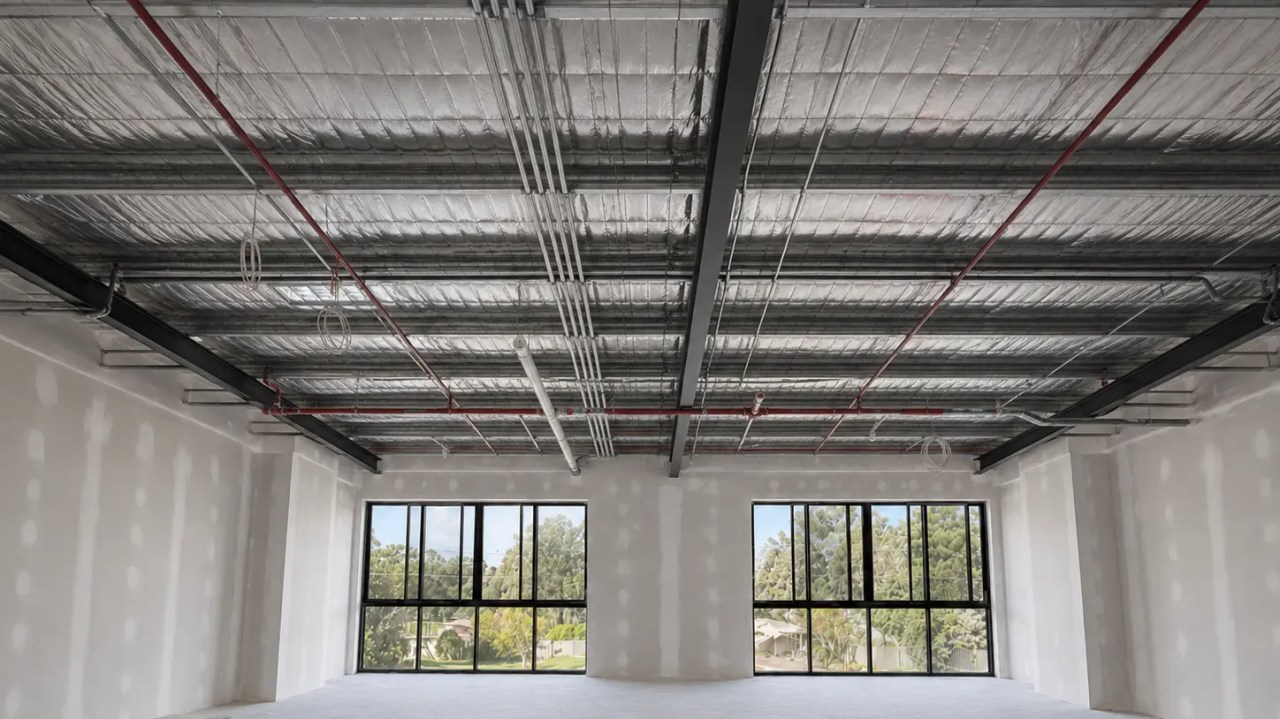
This page covers what to record first, how the evidence is read, how the decision between repair and replacement is made, and what changes after the repair.
What to Record Before Any Conclusion
Record the extent, the water history, the condition of the lining and the findings above the ceiling, and do it before anything is cleaned, removed or repainted.
The extent comes first: photographs of each affected area with a scale, showing the stain’s shape, any tide marks and whether the paint has blistered. Tide marks are useful because successive rings record where the water stopped and dried, and the outermost ring marks the greatest extent it reached.
The water history is the second item. When the damage was first noticed, whether it appeared after rain or after a fixture was used, whether it has recurred, and whether the source is known all belong in the record. Where the damage was discovered after a period away from the property, the extent of the staining is the evidence that indicates how long it has been developing.
The condition of the lining is the third: whether it is sagging, soft, delaminated or still sound, and whether the paint film has failed. The fourth item is the space above the ceiling, which can only be assessed once access is arranged and safety is confirmed. Recording the insulation condition, the water path and any damaged framing or fixings above completes the picture that the repair scope is built from.
Reading the Evidence
The stain’s shape and position point to a category of source, which narrows where the fault has to be found.
| What you see | Likely source | What it changes |
|---|---|---|
| Rounded stain near an external wall | Roof, flashing, valley or eaves detail | Roof repair before the ceiling is closed |
| Stain in the middle of a room | A service above: bathroom, duct or pipe | Plumbing or waterproofing repair first |
| Long irregular stain following a line | Water tracking along framing or a duct | Trace the path rather than the stain |
| Stain beneath a bathroom in a two-storey home | Failed membrane or a leaking fitting | Waterproofing or plumbing repair first |
| Stain that returns after repainting | Source never resolved | Diagnosis before further coating |
The mechanism matters because water travels. A stain near an external wall usually indicates an entry at the roof or at a wall junction; a stain in the middle of a room usually indicates a service running above it. Because water follows structure and services, the visible damage is a clue to the path rather than its location, and the diagnosis is confirmed from above.
The condition of the lining then determines what can be salvaged. A ceiling that has been wet briefly and dried with the source resolved can often be refinished. A ceiling that has been wet repeatedly, or where the lining has sagged or lost strength across an area, is usually replaced rather than repaired. Storm-driven rain is a common cause in Perth, and the preparation guidance published by DFES is useful context for where water typically enters.
Repair, Overlay or Replace
Repair suits a local defect in a sound ceiling, overlay suits a ceiling whose surface cannot be recovered, and replacement suits lining that has lost strength or been wet repeatedly.
Local repair is the right answer where the damage is contained and the surrounding lining is sound. A patch can be cut in, taped and finished, provided the source is resolved and the ceiling has dried. Where the affected area is small but the cause is a hidden defect, the repair follows the cause rather than leading it.
Overlay is used where the ceiling has been patched repeatedly or where the surface cannot be brought back. It requires the extra depth and fixings into sound framing, and it gives a fresh surface across the whole area rather than a series of patches.
Replacement is required where the lining has lost strength, where the affected area is large, where the ceiling has been wet repeatedly, or where the material cannot be confirmed as sound. Wet insulation is part of that decision: where it cannot be dried in place or has slumped, it is removed and the space is dried and inspected before reinstatement. Where an older ceiling may contain asbestos-containing material, the work stops until it has been assessed, under the guidance published by the Asbestos Safety and Eradication Agency and the state position from WorkSafe WA.
Water Damage Ceiling Repairs: What the Scope of Works Should Contain
The scope separates the make-safe, the source repair, the drying, the removal, the reinstatement and the finishing, because each has a different owner and a different decision.
The make-safe comes first and is often the only work authorised before a claim is assessed: stopping the water, isolating affected circuits, removing anything loose and protecting the room below. It is recorded as temporary so that it is not mistaken for a completed repair.
The source repair follows and usually belongs to another trade: roofing, plumbing or waterproofing. Drying and assessment come next, because the reinstatement depends on the assembly having reached an acceptable moisture condition. Removing affected material without drying and inspecting the space above it usually reproduces the damage.
Reinstatement and finishing close the scope: the lining, the cornice, the insulation, any services and the coating. Each boundary should be stated, because a scope that says “repair ceiling” without naming those items will be varied. The installation requirements for the reinstated lining sit in the National Construction Code.
Insurance, Strata and Approval Paths
Insurance and strata matters are decided on documentation, and the evidence is collected before anything is removed.
The evidence set covers the date the damage was noticed, photographs with a scale, the moisture history, the source once identified, and the findings above the ceiling. For a strata property, the additional item is the position of the damage relative to the lot and the common property, because that determines which party is responsible for each part of the work.
The scope then has to describe what will be reinstated, in stages, with the boundaries named. Insurers and owners corporations approve scopes rather than conversations, and ambiguity at those boundaries is where disputes arise after the ceiling is closed.
Contractors cannot predict coverage, and CeilingPro does not attempt to. What can be done is to record the condition accurately, describe the scope in stages, and preserve the evidence. Where the work requires a permit, the framework for approvals in Western Australia is published by Building and Energy. Where the ceiling is also a rated or acoustic element, the assembly documentation applies to the reinstatement.
Sequencing Around Other Trades
The sequence runs from the source outward: source repair, drying, inspection, removal, reinstatement, cornice, insulation, then finishing.
Where the source belongs to another trade, the ceiling work waits. That is the single most important sequencing rule in water damage, because reinstating a ceiling before the entry is fixed guarantees the work will be repeated. Where the building has to remain habitable, the affected area is isolated and the rest of the room kept usable.
Electrical work is sequenced early. Water in a ceiling can reach fittings and junction boxes, and isolating or reinstating circuits is licensed work carried out before the ceiling is closed. Roof space access, working at height and any work around services follow the duties published by Safe Work Australia and by the state regulator.
Where the ceiling is open for an extended period, protection matters. Dust, weather and accidental damage to the exposed space all create secondary problems, and the responsibility for protecting a partially completed ceiling should be clear before the work starts.
What Changes After the Repair
What changes is the moisture path, the condition of the assembly above the ceiling, and the record of what was found.
The moisture path changes when the source is repaired and the water is directed where it should go. Where the repair involved a roof or a waterproofing membrane, the change is verified by observation over a wet period rather than assumed from the completion of the work.
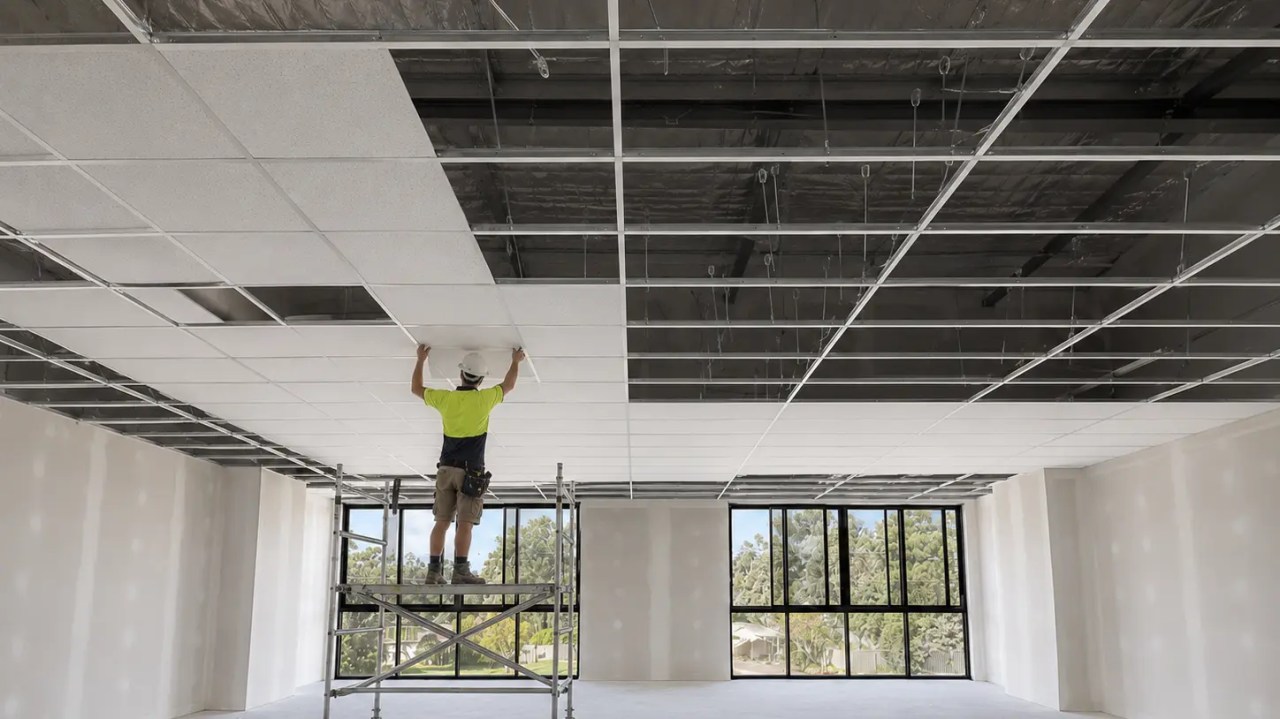
The assembly changes where lining and insulation have been replaced. New lining, reinstated cornice and new insulation mean the ceiling performs differently from the one that failed, and the difference is worth recording so that a future assessment is not based on the original construction.
The record is the third change and the most durable. Knowing where the water entered, what it affected, what was replaced and what was left in place means a future question about the ceiling can be answered from the file. It also supports any future claim, since the original condition is documented rather than remembered. For related work, see the repairs and maintenance service page, with further guides under knowledge.
Frequently Asked Questions
What should I do first when a ceiling has water damage?
Stop or isolate the water and make the area safe before touching the ceiling. Water entering a ceiling can reach wiring and fittings, so affected circuits are isolated by a licensed electrician, and anything at risk of falling is cleared. Recording the extent and the date comes before any repair is planned.
Can a water damaged ceiling be repaired or must it be replaced?
A ceiling that has been wet briefly and has dried while remaining sound can often be refinished once the source is fixed. Replacement is needed where the lining has lost strength, sagged or delaminated, where it has been wet repeatedly, or where the material cannot be confirmed as sound. The decision follows an inspection of the lining and the space above it.
Does wet insulation have to be replaced?
Often yes. Water fills the air spaces that give insulation its performance, and loose-fill material commonly slumps and leaves uneven coverage after wetting. Wet insulation also keeps the ceiling lining and framing damp long after the surface feels dry, which is why it is inspected and usually removed rather than left in place.
What drives the cost of a water damaged ceiling repair?
CeilingPro does not publish prices or price ranges. The scope depends on the cause and its repair, the area affected, whether the lining and insulation have to be replaced, how long the ceiling has been wet, the cornice and services involved, and whether the work is documented for an insurer or owners corporation.
If a Perth ceiling has been affected by water, send photographs with a scale, the moisture history and the source if known through the CeilingPro enquiry form and select repairs and maintenance, or email info@ceilingpro.com.au.


